Where Culture meets STEM: Empowering future leaders in Wadeye
More than 420km south-west of Darwin, where sealed highways give way to dirt roads, 110 students in the remote Aboriginal community of Wadeye explored firsthand how culture, community and STEM can work together to shape future opportunities.
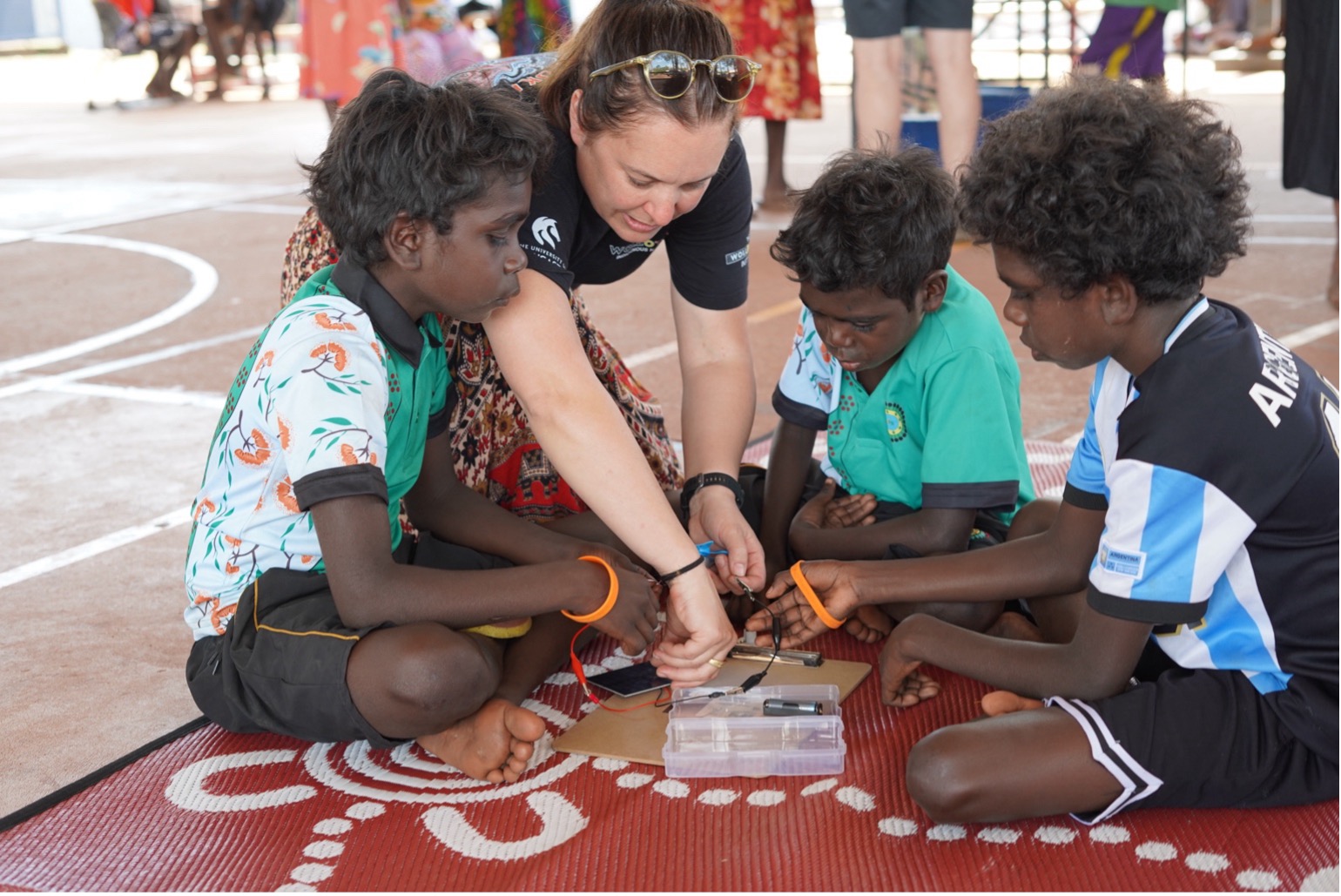
The University of Newcastle’s National Science and Engineering Challenge, SMART program and the Wollotuka Institute travelled to Wadeye to deliver a series of hands-on science, technology, engineering and mathematic (STEM) activities that connect learning with culture.
What emerged was far more than a STEM program, it became an opportunity to show how Indigenous knowledge and contemporary STEM practices can work together to support local aspirations, create new opportunities and help shape the future for young people in the region.
Bandjin woman and Pro Vice-Chancellor of Indigenous Strategy and Leadership at the University of Newcastle, Loren Collyer said STEM is fundamentally about knowledge, and Australia’s oldest continuing knowledge systems have a vital role to play in shaping our future.
"As the saying goes, you can't be what you can't see. That's why representation matters. Through the leadership of the University of Newcastle and its Wollotuka Institute, we're helping our people see that our Indigenous knowledges belong alongside science, technology and innovation," Mrs Collyer said.
"Whether they're growing up in Newcastle or in some of Australia's most remote communities, like Wadeye, Aboriginal and Torres Strait Islander students should be able to see themselves succeeding through education and pursuing pathways in STEM.
“When our people see their knowledge systems valued and reflected in education, it broadens aspirations, creates opportunities and reinforces that Indigenous ways of knowing have an important place in shaping Australia's future."
The initiative reinforced that STEM is already woven throughout life in Wadeye. From caring for Sea Country to supporting sustainable industries, many of the concepts explored during the program reflected knowledge and practices already familiar to students.
A key component of the visit was the collaboration with Thamarrurr Sea Farmers, an Indigenous-led commercial seafood and aquaculture enterprise that combines traditional Sea Country knowledge with modern industry practices.
The Sea Farmers' work provides a powerful example of how cultural knowledge and environmental stewardship can create local employment and industry opportunities. For many students, it demonstrated that that STEM is not something distant or confined to classrooms and laboratories. Instead careers in the STEM field already exist within their own community.
The University's SMART team, which inspires students to explore science and engineering, brought these concepts to life through a series of interactive experiments. Students tested water samples collected from local sources, examining pH levels and water safety. They also had the opportunity to build simple electrical circuit systems using batteries, wires and lights before progressing to a solar-powered designs. By incorporating solar panels, a small fan and an LED light, students saw firsthand how sunlight can be converted into usable energy.
The University’s National Science and Engineering Challenge Event Manager, Mick Cassey said the program encourages students to think like engineers.
“In our flight challenge activity, students build and modified model gliders, adjusting the flap design and weight distribution to improve flight performance,” Mick Cassey said.
“Our other activity drew on inspiration from sustainable fishing practices. Using 3D-printed rocks and marbles, students designed fish traps that captured targeted species while allowing younger and breeding-age fishes to pass through. The exercise combined sustainability, engineering and problem solving in a practical, hands-on way.”
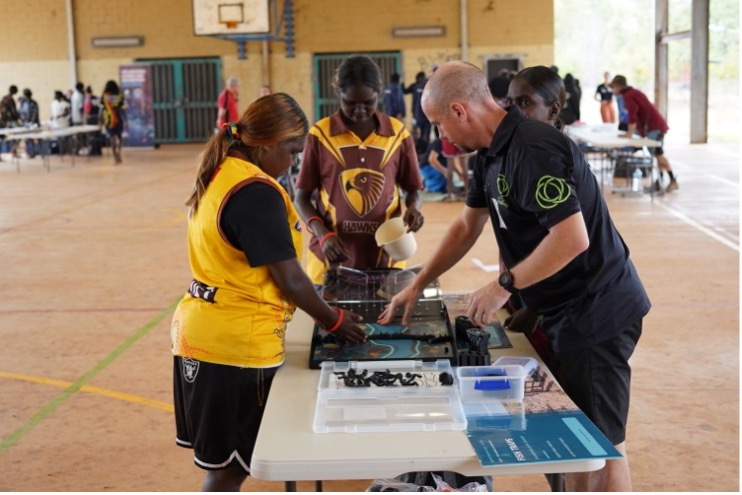
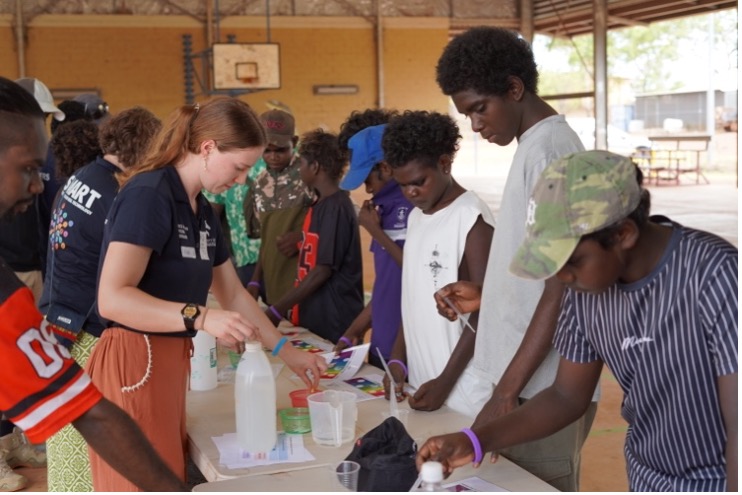
For many young people in remote communities, opportunities to engage directly with universities, STEM educators and industry professionals are limited. Programs like these help Aboriginal and Torres Strait Islander students broaden their aspirations and explore pathways that may once have seemed beyond reach.
Head of Pastoral – Secondary College at Our Lady of the Sacred Heart Thamarrurr Catholic College Carol Dixon said STEM is embedded in students’ everyday living, even when they don’t realise it.
“Our students are practicing STEM-related skills every day. Whether they’re building fish traps, crafting spears or caring for Country, they're constantly thinking critically and solving problems,” Ms Dixon said.
“Programs like these help bring those skills into focus and show students that the knowledge they already have connects directly to STEM. It allows them to see just how capable they are and the opportunities that are open to them.”
This University of Newcastle-led initiative was made possible through a partnership with Our Lady of the Sacred Heart Thamarrurr Catholic College, Thamarrurr Development Corporation, the Traditional Owners of Wadeye and Thamarrurr Sea Farmers.
Contact
- Rickelle Peris
Related news
- Where Culture meets STEM: Empowering future leaders in Wadeye
- Showing our support for the Koori Knockout
- University of Newcastle engineering leader awarded prestigious Engineers Australia Fellowship
- Opinion: HSC students be ambitious, but also kind to yourself
- Vice-Chancellor Professor Alex Zelinsky to retire in February 2027
Aligned with the United Nations Sustainable Development Goals

The University of Newcastle acknowledges the traditional custodians of the lands within our footprint areas: Awabakal, Darkinjung, Biripai, Worimi, Wonnarua, and Eora Nations. We also pay respect to the wisdom of our Elders past and present.