
Global evidence reveals the scale of humanity’s imprint in Earth’s geology
A major international review argues that human-driven change since the mid-20th century is significant enough to mark the beginning of a new geological chapter in Earth’s history: the Anthropocene.
Published in Nature Reviews Earth & Environment, the review brought together evidence from 12 sites across five continents showing that human activity has left a distinct and measurable mark in Earth's geological record.
University of Newcastle Associate Professor Andrea Borsato, was one of 29 scientists and the sole author based at an Australian institution. The team examined environmental markers preserved in natural archives spanning across five continents including lake sediments, marine deposits, ice cores, peatlands, coral reefs and cave formations.
Associate Professor Borsato said the review evidenced how Earth – and not just our human world – changed fundamentally in the post-World War II global boom.
“What’s remarkable is that we see the same signal appearing almost simultaneously in very different environments around the world,” Associate Professor Borsato said.
Researchers assessed a wide range of human-related markers preserved within geological archives, including radioactive fallout from nuclear weapons testing, by-products of fossil fuel combustion, changes in carbon and nitrogen cycles, and other indicators linked to industrialisation and rapid global development after World War II.
Associate Professor Borsato said the findings highlight both the scale and abruptness of human-driven changes since the mid-20th century.
“Human activities have influenced environments for thousands of years, but the global signals recorded in these natural archives become much stronger and more widespread after the 1950s.”
The review builds on work undertaken by the Anthropocene Working Group, established in 2009 to investigate whether the Anthropocene should be formally recognised as a new epoch in the Geological Time Scale, distinct from the Holocene.
While a proposal to formally define the Anthropocene was rejected in 2024, Associate Professor Borsato said the debate remains important because although the term is now widely used, the lack of a formal definition has given rise to ambiguity within the scientific community.
"A formal definition would help distinguish between the long history of human influence on local environments and the more recent global-scale changes that are now clearly recorded in geological archives."
Human activity encoded into cave stalagmites
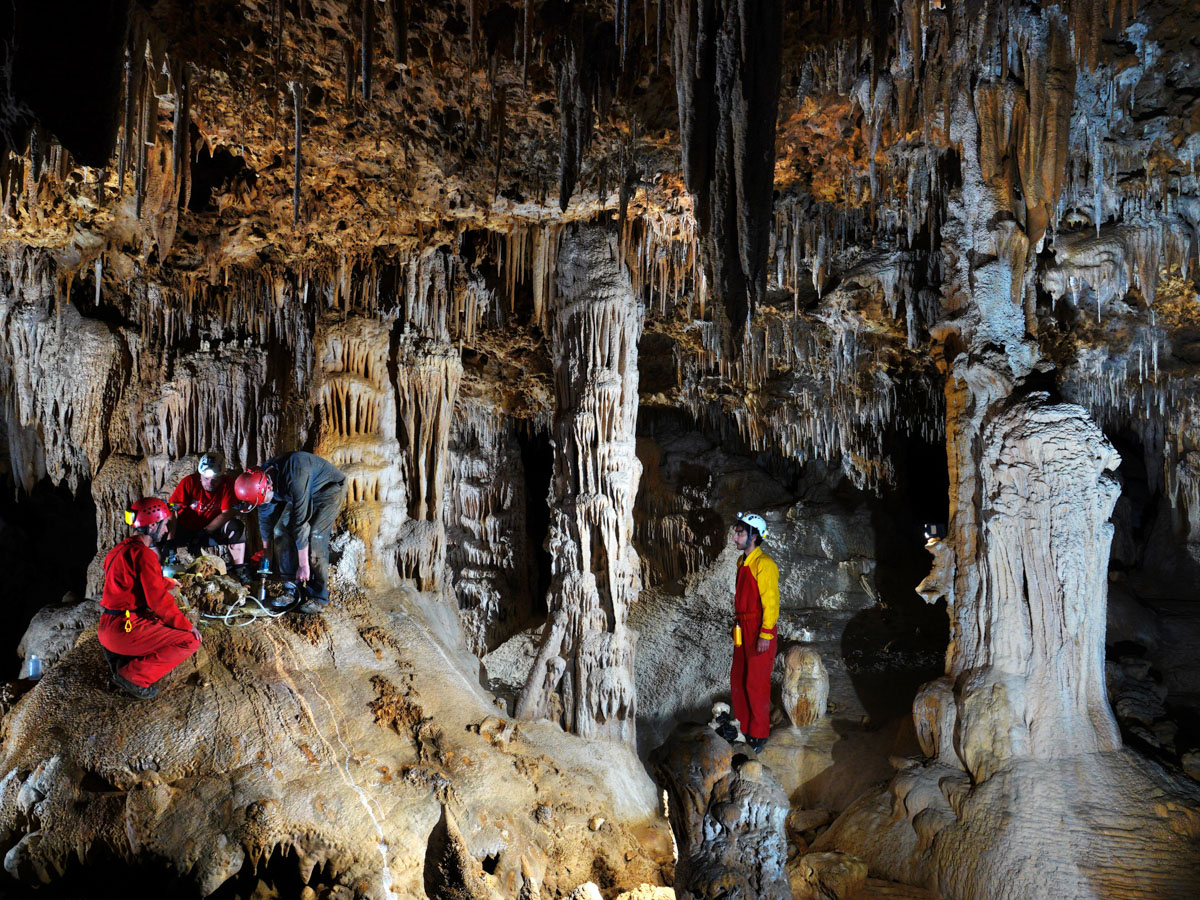
Associate Professor Borsato's contribution focused on stalagmites from Grotta di Ernesto in the Italian Alps (pictured), one of the sites assessed by the Anthropocene Working Group.
F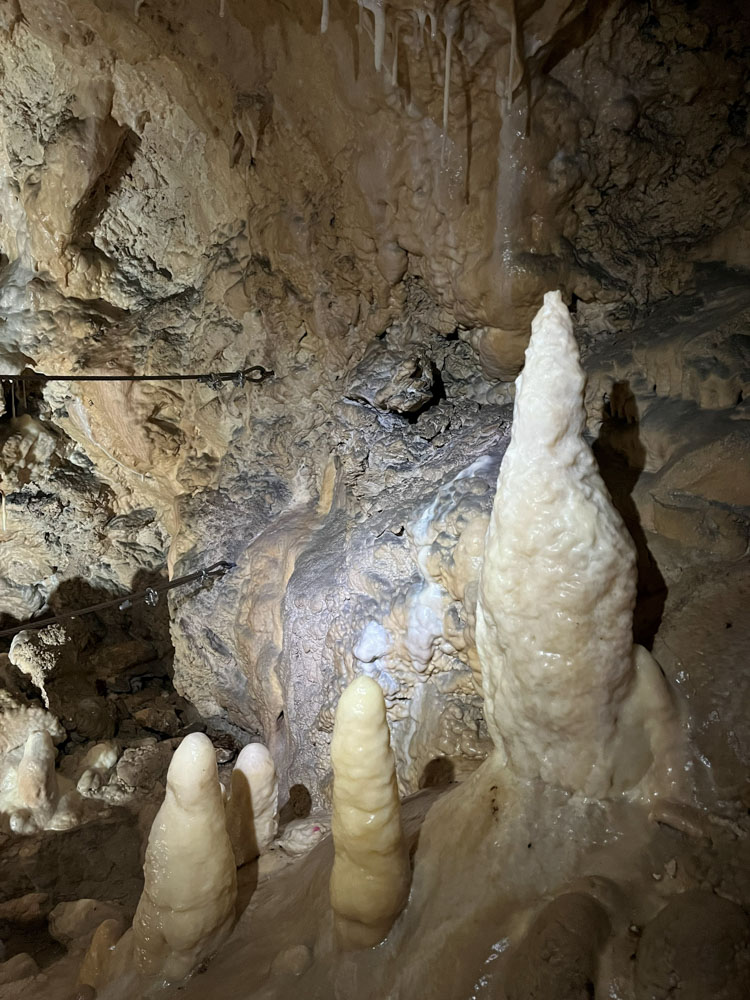 ormed by carbonate-rich water dripping through cave ceilings over thousands of years, stalagmites act as natural archives of climate and environmental change. Using advanced dating and geochemical techniques, researchers identified signals linked to industrial activity and nuclear weapons testing, demonstrating that even cave systems preserve evidence of human impacts on the planet.
Associate Professor Borsato said unlike lake sediments and ice cores, however, cave records do not directly capture signals from the atmosphere.
“The soil acts as a natural filter, so some atmospheric signals are delayed or weakened before reaching the cave,” Associate Professor Borsato said.
“Even so, stalagmites preserve evidence of major environmental changes linked to human activity.”
While some globally recognised Anthropocene markers were too weak to be detected in the cave record, the research confirmed that human-driven environmental change can be identified even in remote underground environments.
The findings have informed ongoing University of Newcastle research investigating cave records across the Pacific, including the Cook Islands, Tonga and French Polynesia.
Contact
- Media & Communications Specialist, Penny Harnett
- Email: media@newcastle.edu.au
Related news
- Global evidence reveals the scale of humanity’s imprint in Earth’s geology
- Where Culture meets STEM: Empowering future leaders in Wadeye
- Showing our support for the Koori Knockout
- University of Newcastle engineering leader awarded prestigious Engineers Australia Fellowship
- Opinion: HSC students be ambitious, but also kind to yourself
Aligned with the United Nations Sustainable Development Goals



The University of Newcastle acknowledges the traditional custodians of the lands within our footprint areas: Awabakal, Darkinjung, Biripai, Worimi, Wonnarua, and Eora Nations. We also pay respect to the wisdom of our Elders past and present.