
Innovative ideas awarded $3.8m in NHMRC research grants
Three University of Newcastle research teams have been awarded more than $3.8 million in National Health and Medical Research Council (NHMRC) Ideas Grants, designed to support innovative research projects which address a specific question.
The teams, led by Dr Jacinta Martin, Dr Guy Cameron and Professor Juanita Todd, will explore a plant-based dietary intervention to reduce PFAS bioaccumulation, investigate how low iron levels during pregnancy may predispose children to respiratory and ear infections, and will aim to close key knowledge gaps about the origins of schizophrenia.
Researchers to examine how ‘forever chemicals’ affect pregnancy and babies — and whether diet can help protect families
Dr Jacinta Martin
$1.8m
A healthy start to life is crucial for shaping a child’s life-long health and wellbeing.
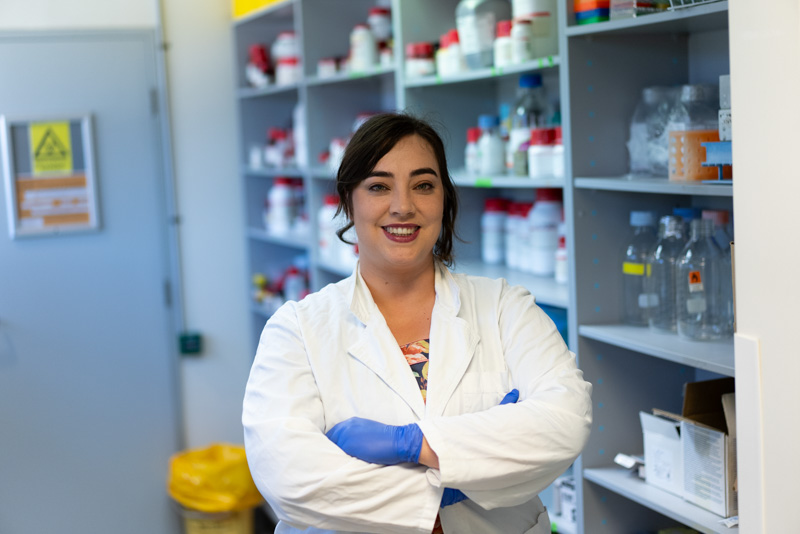
Led by University of Newcastle’s Dr Jacinta Martin, of HMRI’s* Infertility and Reproduction Research Program, together with Drs Joseph Pegler and Marcus Crompton, this project will investigate how exposure to persistent environmental chemicals such as per- and polyfluoroalkyl substances (PFAS), affects the health of parents and children during the crucial perinatal period.
 Despite growing evidence linking PFAS to pregnancy complications, developmental issues and long-term disease risk, the biological mechanisms behind these effects remain poorly understood.
Bringing together experts in reproductive health, developmental biology, engineering, plant science and food technology, the research will aim to uncover how PFAS cause harm and test an innovative plant-based dietary intervention designed to reduce PFAS accumulation in the body.
The findings are expected to enable delivery of safe, efficient, accessible and cost-effective intervention strategies to alleviate the consequences of PFAS exposure for those in contaminated communities.
Study to examine how low early-life iron raises respiratory and ear infection risks for Aboriginal children
Dr Guy Cameron
$1.3m
Otitis media, or infection of the middle ear, is a leading cause of preventable hearing loss and developmental delay in children, with Aboriginal and Torres Strait Islander children experiencing the highest rates globally.
 Iron deficiency, common within Australian communities during pregnancy and early life, may impair immune responses and increase susceptibility to respiratory infections, yet its role in the formation of otitis media is unknown.
This project will be the first to explore how low iron levels during pregnancy and subsequent dysregulation of iron in early life affect the risk of otitis media in children.
Led by University of Newcastle’s Dr Guy Cameron, of HMRI’s Immune Health Research Program, the team will use lab models and clinical samples to understand how iron impacts immune responses and bacteria in the ear.
Guided by the Wukul Yabang Aboriginal Health Community Research Panel and community partners, the research aims to support better prevention strategies, like iron supplements, to reduce ear disease and improve health outcomes for Aboriginal and Torres Strait Islander children.
Understanding early brain changes to help understand schizophrenia
Professor Juanita Todd
$644,000
Schizophrenia is widely known for its obscure symptoms such as hallucinations and delusions that emerge in early adulthood, yet subtle changes in brain function can be detected much earlier and are thought to arise from altered brain development.
One early marker is impaired sensory gating—the brain’s ability to filter out irrelevant information—which can be measured in both humans and preclinical research settings. This project brings together cutting-edge human studies and parallel laboratory research to uncover the biological processes that disrupt sensory gating and increase vulnerability to schizophrenia.
Led by University of Newcastle’s Professor Juanita Todd, of HMRI’s Healthy Minds Research Program, Newcastle’s Dr Lauren Harms, Dr Erin Campbell and Emeritus Professors Deborah Hodgson and Pat Michie will partner with investigators from the USA and France.
The project will examine how developmental risk factors and specific neurotransmitter systems shape these early brain changes, alongside advanced computational modelling to map how these effects relate to learning processes and human patient data.
The findings are expected to close key knowledge gaps about the origins of schizophrenia and support improved monitoring and early intervention.
*HMRI is a partnership between the University of Newcastle, Hunter New England Health and the community.
Related news
- Global evidence reveals the scale of humanity’s imprint in Earth’s geology
- Housing challenge reshapes the future of regional growth
- Where Culture meets STEM: Empowering future leaders in Wadeye
- Showing our support for the Koori Knockout
- University of Newcastle engineering leader awarded prestigious Engineers Australia Fellowship
Aligned with the United Nations Sustainable Development Goals
The University of Newcastle acknowledges the traditional custodians of the lands within our footprint areas: Awabakal, Darkinjung, Biripai, Worimi, Wonnarua, and Eora Nations. We also pay respect to the wisdom of our Elders past and present.