Exercise for students with disability boosts wellbeing beyond the classroom
An innovative school exercise program targeting students living with a disability has shown short bursts of physical activity during the school day significantly improve health and learning outcomes.
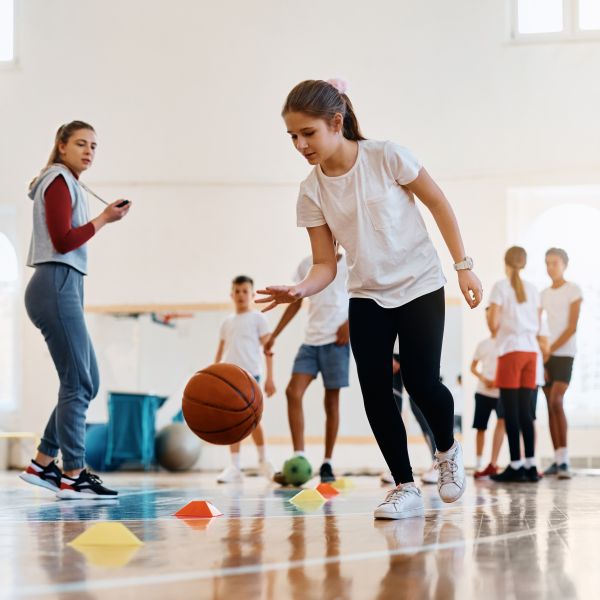
Youth living with disability are proven to be less physically active and more likely to have chronic health conditions than their peers without disability, leading to significant inequality.
In response to calls from special education teachers, University of Newcastle researchers adapted the successful school-based intervention program, Burn 2 Learn, developing a tailored and inclusive program to implement across special education classes.
Lead investigator, University of Newcastle Professor David Lubans of the Global Sport and Movement Collaborative and HMRI’s Active Living and Learning Research program, said the preliminary outcomes were very encouraging.
“We saw hugely successful results in our original Burn 2 Learn intervention and were approached by local special education teachers who were keen to use the program to support their students’ health and wellbeing,” Dr Lubans explained.
“We understand that special education teachers face unique classroom challenges and are looking for new ways to support their students’ health and educational outcomes.”
In response, Professor Lubans and team partnered with the NSW Department of Education and Special Olympics Australia to develop the Burn 2 Learn(a) adapted program, which includes sessions featuring foundational resistance exercises (push-ups, bodyweight squats), aerobic exercises (shuttle runs), and sport skills (catching and kicking).
The research team provided special education teachers with training and support to deliver the sessions as classroom activity breaks 2-3 times per week for a period of six months. The study included 255 students aged between 15-19 with diagnosed cognitive and physical disabilities from 28 secondary schools across New South Wales.
Using the ‘six-minute walk test’ (6MWT) – a universal and simple functional assessment that measures how far a person can walk in six minutes – adapted to include wheelchair users, the researchers noted a group average of an additional 20 metres in comparison with the control group.
“As far as we’re aware, this is the largest study evaluating the effects of a school-based physical activity intervention for youth with disability. Although the improvements were modest, our findings are important because the effects were sustained at 9-months, suggesting that the activity breaks had become part of the school day,” Dr Lubans said.
“A huge part of this work is improving students’ physical literacy, so they have the confidence, competence, knowledge and motivation to be physically active beyond the classroom. We shouldn’t assume every child has equal access to a gym or organised sport outside of school, so enhancing students’ exercise confidence and competence is as important as developing their numeracy and literacy skills,” he added.
Beyond the physical health benefits, the research team found that students also showed positive changes in classroom behaviour and reported feeling happier after participating in classroom activity breaks, mirroring Burn 2 Learn’s original findings.
“Most school-based physical activity interventions for youth with disability, are small-scale and delivered by external providers rather than classroom teachers. Our approach is unique, time-efficient, and scalable because it involves training special education teachers to deliver the program with minimal support from the research team,” Dr Lubans said.
“As youth with disability are often neglected in health promotion efforts, we’re hopeful education systems across Australia will see value in this work to support their staff in classrooms everywhere”.
Executive Director, Student Support and Specialist Programs from NSW Department of Education, Dr Sylvia Corish, added that physical activity plays a vital role in supporting students’ wellbeing, confidence, and capacity to learn.
“The Burn 2 Learn adapted program demonstrates that even short movement bursts can meaningfully improve students’ health and engagement,” she said.
“By equipping teachers with practical ways to embed movement, programs like Burn 2 Learn help students with disability build lifelong habits supporting their physical and mental wellbeing.”
HMRI is a partnership between the University of Newcastle, Hunter New England Health and the community.
Related news
Aligned with the United Nations Sustainable Development Goals
The University of Newcastle acknowledges the traditional custodians of the lands within our footprint areas: Awabakal, Darkinjung, Biripai, Worimi, Wonnarua, and Eora Nations. We also pay respect to the wisdom of our Elders past and present.