Yarning Circle to bring communities together
A Yarning Circle, established to provide a significant and accessible meeting space for local Aboriginal communities and the Central Coast community, has officially opened at the University of Newcastle’s Ourimbah campus.
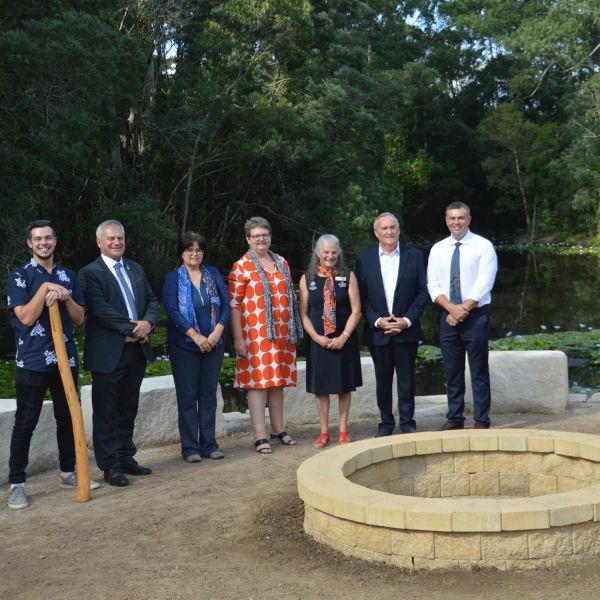
Called nganggali ngara ngura in Darkinjung language, it means Talking Listening Place, providing a safe place to be heard and to respond. It is a place to talk, share, discuss, educate and have a yarn together – a place to build respectful relationships and a space to enrich students’ learning experiences.
The Yarning Circle represents the University’s commitment to supporting and sharing Aboriginal and Torres Strait Islander cultures; as well as acknowledging the connection between the University and Darkinjung Country.
University staff, students and the community members gathered to celebrate the official opening of nganggali ngara ngura, where Elder In-Residence Aunty Bronwyn Chambers provided insight into its purpose and significance.
“Aboriginal and Torres Strait Islander peoples have been using yarning circles for thousands of years,” she said.
“These circles provide a safe place for all to speak without judgement. It is a collaborative way to communicate and provides a respectful place to be heard and to respond.
“Today, they are used as a meeting place for both Aboriginal and Torres Strait Islander and non-Aboriginal communities to come together.”
Ma and Morley Scholar Jack Chambers initiated the event by playing the Yadaki (or digeridoo) and the boys from The Glen Centre closed the ceremony with a celebratory dance.
Related news
The University of Newcastle acknowledges the traditional custodians of the lands within our footprint areas: Awabakal, Darkinjung, Biripai, Worimi, Wonnarua, and Eora Nations. We also pay respect to the wisdom of our Elders past and present.