
OER supplementary materials
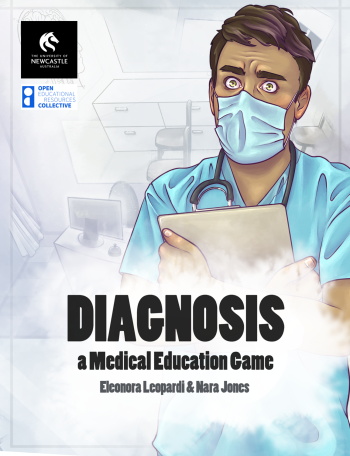
Diagnosis: a Medical Education Game
Diagnosis was created with, and for, students in the Joint Medical Program (JMP). The JMP is a unique partnership of the University of Newcastle and the University of New England. Learning is problem-based, and supported by early and broad clinical experience. This game-based open resource enables medical students to develop their diagnostic skills and adaptive expertise as they compete with each other to solve a clinical case.
Provide feedback on Diagnosis or request permissions for game-related images
Diagnosis: A Medical Education Game - Printable and Supplementary Materials
Diagnosis Instruction Manual & Resource Guide - printable from Word or PDF
Diagnosis Student instructions - printable from Word or PDF
Department Board - printable as High resolution or Medium resolution
Facilitator Notebook - printable from PDF file or JPG/image
Cases and Handouts folder (includes Word and PDF versions)
Question Cards folder (includes PowerPoint and PNG/image versions)
Healthcare Tokens - printable from PDF
Game Marker - 3D printable from STL. Manhattan Project Meeples by tinkerbittany is licensed under CC BY 4.0.
Links to 4-sided dice:
Diagnosis: A Medical Education Game - Resource Templates
Diagnosis Case Template (Word)
Diagnosis Question Card Template (PowerPoint)
Diagnosis Medical Record Template (PDF)
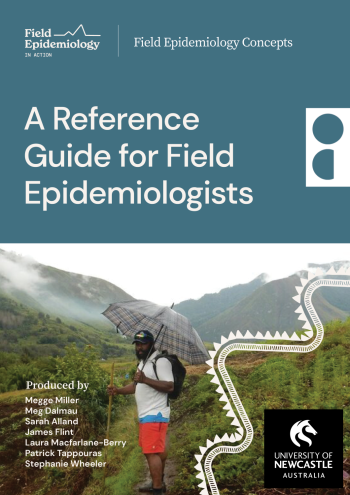
A Reference Guide for Field Epidemiologists
This reference guide has been developed specifically for students, faculty and alumni of the field epidemiology training programs in Papua New Guinea and Solomon Islands, but is general enough for use in any intermediate level program. It contains definitions and worked examples of key field epidemiology concepts such as surveillance, outbreak investigation, and communicable disease control.
Downloadable and printable Case Studies
Free online refresher training for field epidemiologists
Provide feedback on A Reference Guide for Field Epidemiologists
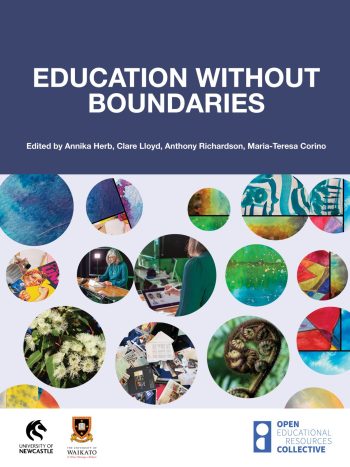
Education Without Boundaries
The authors expand on their experiences in creating and facilitating inclusive and accessible learning experiences through teaching, course and curriculum design, and other aspects of teaching and learning to explore innovative teaching practices and pedagogies around inclusion. Key topics include the student experience, focusing on retention, support, experience or empowerment; equitable access, opportunities, and diversity; flexible modes of delivery; assessment design; physical and virtual learning spaces; and generative AI in higher education.
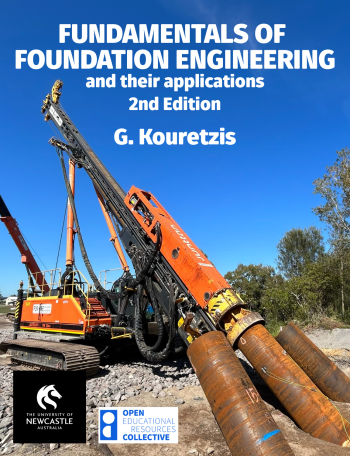
Fundamentals of Foundation Engineering and Their Applications (2nd Edition)
Fundamentals of Foundation Engineering is primarily based on teaching material developed by the author over several years for courses at the University of Newcastle, Australia. It focuses on application of fundamental soil mechanics concepts to practical geotechnical engineering tasks, such as: interpretation of geotechnical investigation results, design of shallow foundations under serviceability and ultimate limit state conditions, and analysis and design of deep foundations. The resource includes a brief introduction to geoenvironmental engineering, concentrating on the problem of soil and groundwater contamination, the description of relevant remediation techniques and the demonstration of simple methods for the design of remediation facilities.
The University of Newcastle acknowledges the traditional custodians of the lands within our footprint areas: Awabakal, Darkinjung, Biripai, Worimi, Wonnarua, and Eora Nations. We also pay respect to the wisdom of our Elders past and present.