
A future-ready university

Measures of success
- Staff engagement: Our staff will feel empowered, supported, and digitally enabled, evidenced through continual improvement in staff engagement surveys.
- Financial sustainability: We will generate a core operating margin of 5% to enable future investments in people and infrastructure.
- Environmental sustainability: We will aim to be carbon neutral by 2029.
Focus areas
We will build on the passion, commitment, and expertise of our people to drive collaboration, innovation, and agility.
Cultural standards will be embedded into leadership and engagement. This will foster trust and belonging through storytelling, transparency, and active listening.
Sustainability is a defining principle that must shape every aspect of how we operate, educate, and contribute to society. For us, this means embracing a holistic understanding of sustainability. This includes environmental stewardship, financial resilience, and ethical responsibility.
We will cultivate high-value international student pathways, global partnerships and strategic relationships. They will enhance our reputation and support our near-term priorities.
We will also create meaningful opportunities for staff, students, graduates, and communities.
Digital technologies are fundamentally transforming how universities operate, engage, and deliver value.
A digital revolution presents challenges and opportunities to reimagine our core functions. We will also be enabled to strengthen our position as a future-ready institution.
Aligned with the United Nations Sustainable Development Goals




People first measures: Measures of success that recognise that we are an institution that exists to improve lives, and whose greatest asset is its people.
Impact measures: Measures of success that seek to ensure that the University can serve future generations.
Our campuses
As a multi-campus university, we embrace the distinct character and strengths of each of our locations. The priorities for each of our campuses will help ensure we are providing a future-ready university experience for our people.
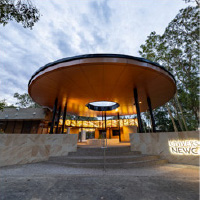
Callaghan
Awabakal Country
Our bushland campus where industry and community converge
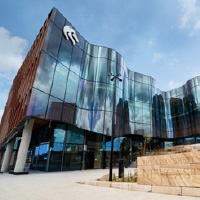
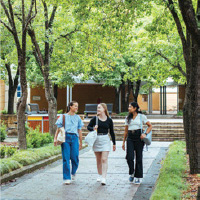
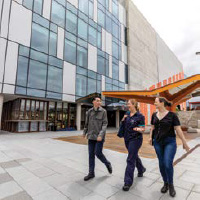
Central Coast
Darkinjung Country
Building a university town for the Central Coast’s future
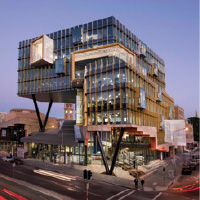
Newcastle City
Awabakal and Worimi Country
Civic heart, cultural catalyst, entrepreneurial hub
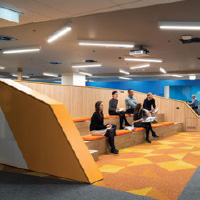
Sydney
Eora Country
A hub for business innovation and international education

Singapore
A gateway to Asia for collaborative education and cutting-edge research
Implementing our strategy
Through this plan, we remain accountable to our students, staff, and regions. We will ensure inclusive, responsive, and impactful outcomes across education, research, and engagement. To ensure the effective implementation of our strategy we will:
- Establish an Integrated Planning Framework
- Embed governance practices that drive strategic outcomes
- Ensure ongoing financial sustainability
- Foster a culture and mindset of continuous improvement
- Promote codesign with stakeholders
- Undertake ongoing monitoring and evaluation
- Enhance strategic communication and engagement
- Integrate risk into strategic planning and decision-making.
Our strategy architecture
Our detailed supporting plans will be the vehicles of success for Looking Ahead 2030 and will be supported by key enabling plans. Operational plans at the institute, college, school, division, and unit level will translate strategic priorities into local action.
Our strategy timeline
The phasing of our strategy shows our estimated effort to deliver on the objectives of Looking Ahead 2030 over time. It will be reviewed annually to reflect new developments and the latest prioritisation of our efforts.
| Supporting Plan | Focus Area | 2026 | 2027 | 2028 | 2029 | 2030 |
|---|---|---|---|---|---|---|
| Life-ready Graduates | An Outstanding Student Experience | Scale up/transition | Maximum effort | |||
| Life-ready | Maximum effort | Scale up/transition | ||||
| Sustainable Learning and Teaching | Lower intensity of effort | Scale up/transition | Maximum effort | |||
| Research Impact | Solving What Matters to our Regions | Scale up/transition | Maximum effort | |||
| Expanding our Collaborations | Scale up/transition | Maximum effort | ||||
| Delivering Research Impact | Lower intensity of effort | Scale up/transition | Maximum effort | |||
| Communicating our Achievements | Scale up/transition | Maximum effort | Scale up/transition | |||
| Engagement that Connects | Building Trust by Engaging | Scale up/transition | Maximum effort | Lower intensity of effort | ||
| Impact for a Sustainable Future | Scale up/transition | Maximum effort | Scale up/transition | |||
| Empowering Communities | Scale up/transition | Maximum effort | ||||
| Our Flagships | Flagship 1 | Scale up/transition | Maximum effort | Scale up/transition | Lower intensity of effort | |
| Flagship 2 | Scale up/transition | Maximum effort | Scale up/transition | |||
| Flagship 3 | Scale up/transition | Maximum effort | ||||
x Lower intensity of effort x Scale up/transition x Maximum effort
Our measures of success
| Measure of success | 2030 target | ||
|---|---|---|---|
| Life-ready Graduates | People First | Quality of Overall Experience (Undergraduate) in Student Experience Survey 1 | Top 10 in the sector |
| Rank in sector for 6-year Undergraduate completion rates 2 | Top 10 in the sector | ||
| Impact | Academic Portfolio Health Index: A multivariate index covering profitability, demand, quality, operational efficiency and strategic alignment. | TBD | |
| Research Impact | People First | Rank in sector for HDR enrolments | Top 10 in the sector |
| Proportion of our research outputs that are in the top quartile of journals. | Top 10 in the sector | ||
| Impact | Rank in sector for total HERDC research income 3 | Top 10 in the sector | |
| Engagement that Connects | People First | External stakeholder sentiment | TBD |
| Impact | QS World University Ranking 4 | 200 | |
| A Future-ready University | People First | Staff engagement scale in Staff Engagement Survey | 80% |
| Impact | Core operating surplus | 5% | |
| Carbon Neutrality (residual tonnes CO2e) | 0t | ||
1 Student Experience Survey
2 Higher Education Statistics releases
3 Higher Education Research Data Collection - Department of Education, Australian Government
4 QS World University Rankings 2026
The University of Newcastle acknowledges the traditional custodians of the lands within our footprint areas: Awabakal, Darkinjung, Biripai, Worimi, Wonnarua, and Eora Nations. We also pay respect to the wisdom of our Elders past and present.