
Turning a passion for business into bigger plans
Taking the first step
Moving from Ecuador to Australia to study was a big decision. But taking opportunities and finding my own way has always been part of who I am.
I have always admired people who take the risk of studying abroad. They inspired me to go looking for that opportunity myself. My first steps were exploring my options and talking with friends who had already made the move.
My family made the decision possible. Having their support, both here in Australia and back in Ecuador, has been incredibly important.
I did not arrive with a blank page. I had a degree in business administration and years of work behind me in audit, financial analysis and business analysis. I did not want to start over. I wanted to build on what I had and move closer to my real ambition: to become a recognised consultant, or to create my own business.
The Master of Business Administration / Master of Marketing and Digital Strategy combined with the finance experience I had already built, is a powerful mixture. It is helping me grow, and it is helping me unleash my future plans.
The anchor I had to lift
Rock climbing taught me something before university did. On the wall, there is no one to blame. Not the rock. Not the weather. Not the person holding your rope. When you freeze, the limit is usually in your head. Learning to question and understand those emotions has shaped my character.
One of the books that shaped how I think is The Rock Warrior’s Way by Arno Ilgner. It is a climbing book, but it is really about the mind. One passage changed how I see my own growth:
“If you can fully embrace the new belief that your mind, not some external factor, is limiting you, then you open up powerful possibilities. You begin to hoist the anchor of your past performances.”
— Arno Ilgner, The Rock Warrior’s Way
When I arrived in Newcastle, I was carrying an anchor. It was made of my past: the roles I had held, the results I had achieved, the way things worked back home. Like many international students, I wondered if I would fit in, and whether my experience would count here.
Ilgner’s idea gave me a better question. Not “What have I done before?” but “What am I telling myself I cannot do?”
That shift is hopeful. External factors are hard to change. A belief can change today. Once I accepted that my own mind was setting the limits, I could finally work on them.
So, I started small. I asked questions in class. I went to events to connect with people. I said yes to projects that would push me. Each step proved an old limit wrong, and the anchor got lighter.
Learning by doing
I chose the University of Newcastle because it offered much more than a good academic environment. It has a vibrant, supportive ecosystem: innovation workshops, entrepreneurship programs, sport and community engagement. I value being in a place where people are encouraged to develop new ideas, collaborate with others and contribute to the community. I strongly recommend the University’s Integrated Innovation Network (I2N), which helps students develop new ideas with a structured methodology and turn them into successful businesses.
The highlight of my degree so far has been the Strategic Intervention Project. Our team worked on a real challenge for Façon Australia and its Indigenous Storytellers Scholarship. A real-world problem pushed us to think more deeply about business theory. We applied frameworks such as the Business Model Canvas, Porter’s Five Forces, McKinsey’s Three Horizons and the Lean Startup. Not as exam answers, but as tools to help a real organisation.
Applying the frameworks from class to a real business problem was incredibly valuable. It sharpened my critical thinking and problem-solving. It showed me how strategic thinking works on complex challenges. Presenting that work, I felt the difference between knowing something and doing it.
I am also putting these skills to work outside university. I work remotely for a small construction company, helping a friend organise and grow his business. A big part of my job is tracking what each construction job really costs, so he can make informed decisions in his business.
Working remotely lets me balance employment with postgraduate study. I can coordinate my work and finish my assignments from home.
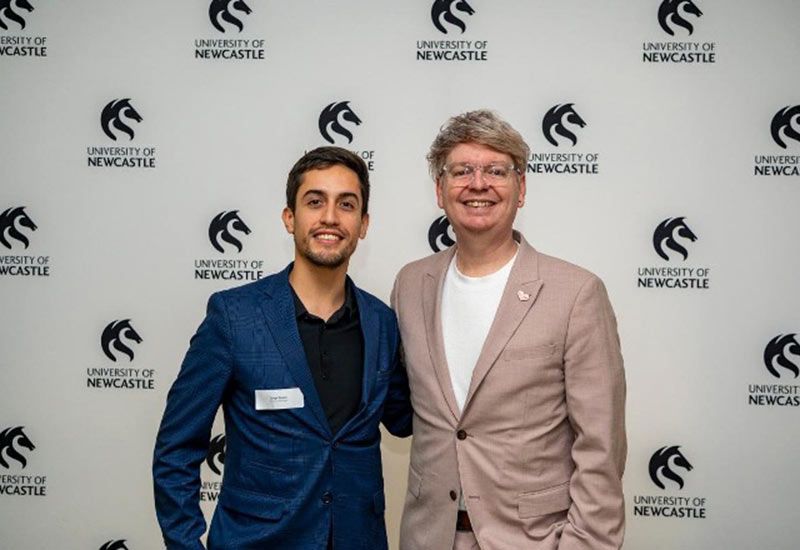
Diego Ponce at a University of Newcastle MMDS event
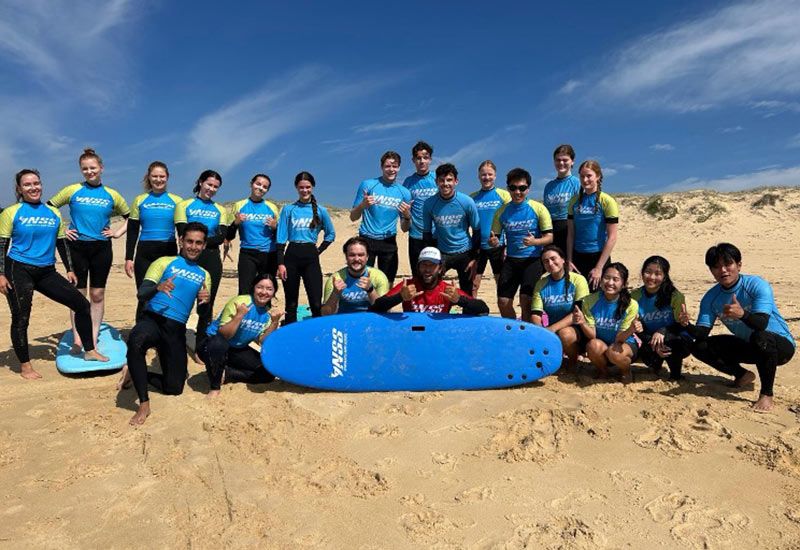
Surf lessons at Nobbys Beach, Newcastle.
Hillview Seventh-day Adventist Church
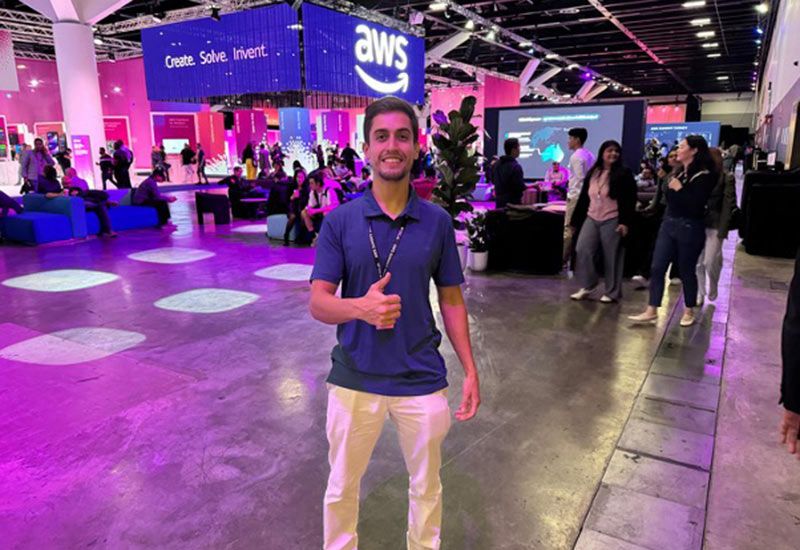
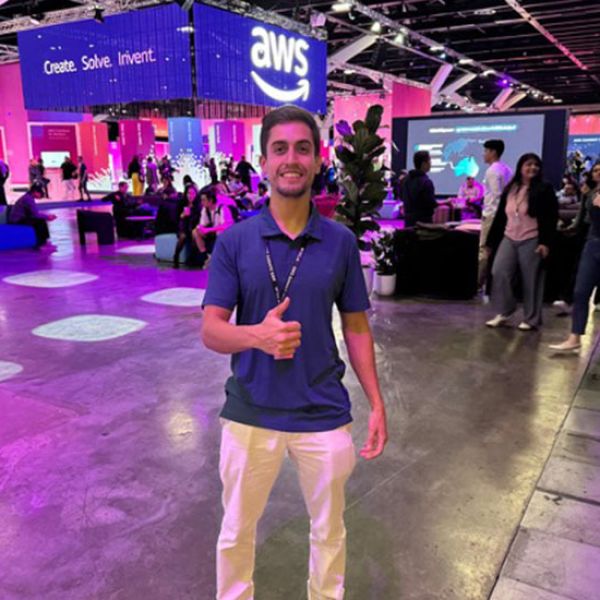
Exploring new technologies at the AWS Summit in Sydney.
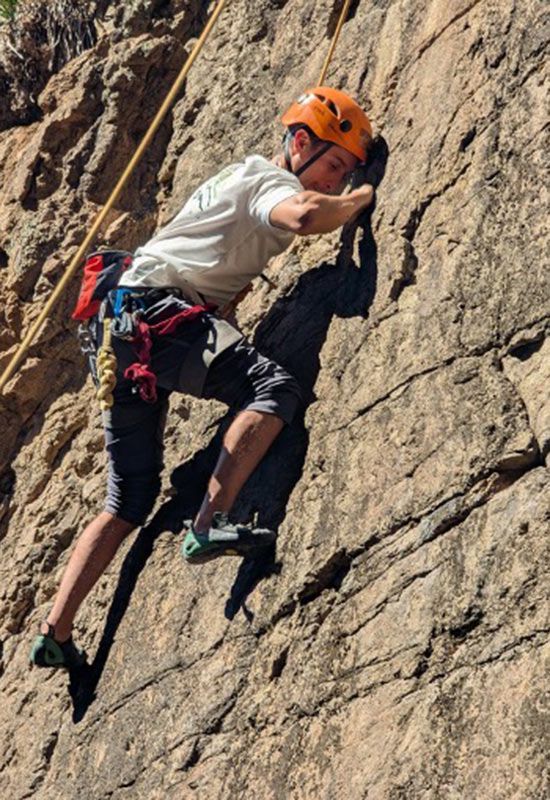
Climbing at Morna Point: the sport has shaped how Diego thinks about limits.
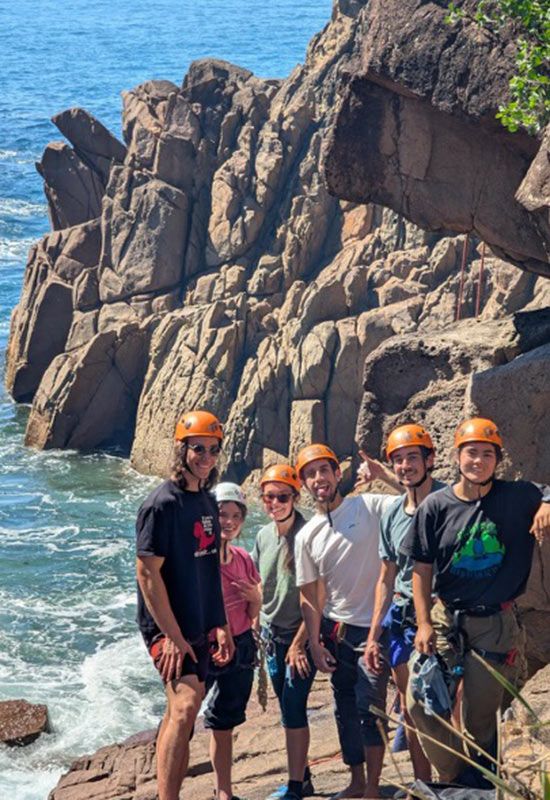
A day on the sea cliffs with fellow climbers.
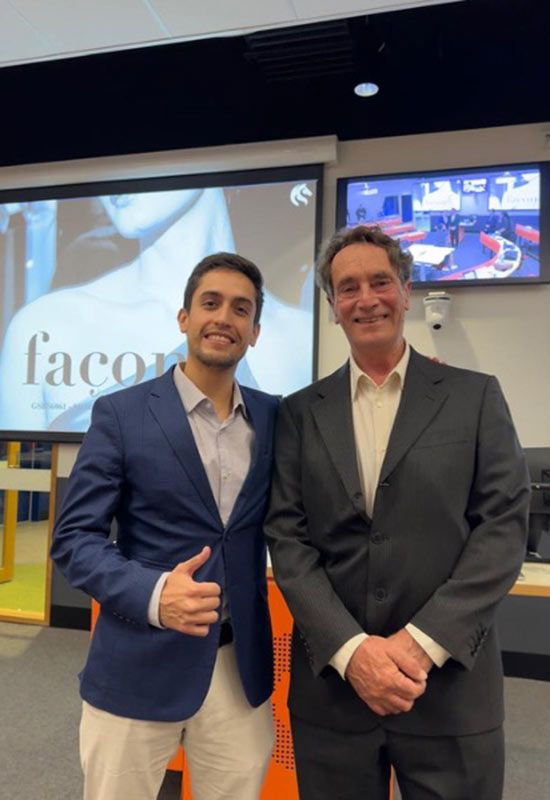
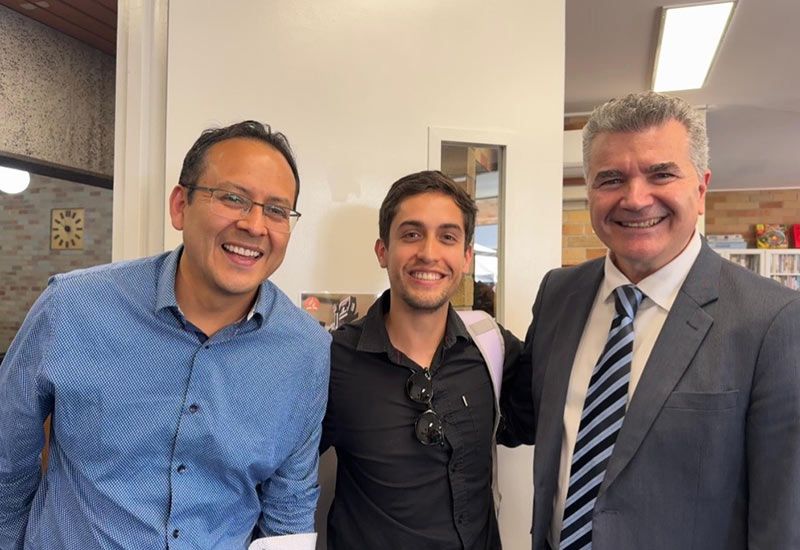
Diego Ponce with Garry Haworth at the Façon Australia final presentation, Strategic Intervention Project (GSBS6061).
An anchor that holds me steady
Not every anchor is a weight. Some hold you steady when the water moves. For me, that anchor has been the Seventh-day Adventist Church.
When you move to a new country, you lose a lot of familiar ground at once: your routines, your language, the people who know your story. The church gave me a community to belong to. It is a place where I am known for who I am, not for my grades or my job title.
It has also given me guidance. When decisions felt big, like what to pursue and how to balance study, work and life, I had people around me who cared about my path, not only my results. That keeps me grounded. It reminds me that ambition is stronger when it serves something larger than yourself.
These two ideas work together. Ilgner taught me to let go of the anchor of past performance. My church community helped me hold on to my trust in God and the Holy Spirit while I did it.
Finding my people
Getting involved in university events and sport has helped me meet people, discover new opportunities and find places where my own hobbies make me feel part of the community.
Some of my best memories are not in a lecture theatre. They are at events like the AWS Summit, in a polo shirt with a name tag around my neck, exploring the technologies I want to work with. They are on the beach at a surf lesson. And they are on the sea cliffs at Morna Point, with a crew of fellow climbers.
My teachers have been a big part of this too. For me, friendship and supportive mentoring from my teachers have been important. Don’t be afraid to ask, explore new opportunities and follow the correct steps.
On campus, the library and the gym are my favourite places. They are where I think, and where I keep an active mindset.
What comes next
I love my career. Business has always been something counter-intuitive to me, and that is exactly what keeps drawing me in and making me more passionate about it.
Strategy and disruptive technologies are my favourite combination in business. Ideas of sustained growth and future planning around customer needs always motivate me. I am especially interested in how technologies like AI, automation and data analytics can help businesses iterate and learn as customer needs change in dynamic markets.
The anchor is up. I am ready to see how far this goes.
My advice to you
If you are thinking about studying overseas, you might worry about fitting in or finding your feet in a new country. That is normal. It is part of the experience.
Keep the things that make you who you are: your sport, your habits, your faith, your interests. They will give you the confidence to get involved and connect with others.
Don’t be afraid to get involved in the community, events, sport or anything you enjoy or that reflects your personality. Make Australia adapt to your personality, not the opposite.
And when you hit a limit, ask yourself one honest question. Is it out there, or is it in my mind? If it is in your mind, that is good news. That is the one you can change.
~ Highlight written by University of Newcastle student Diego Ponce.
Diego Ponce
In his own words, Diego Ponce reflects on moving from Ecuador to Newcastle, challenging his limits and building confidence along the way.
Each step proved an old limit wrong, and the anchor got lighter.
Inspired by Diego's story?
Study a Master of Business Administration / Master of Marketing and Digital Strategy today
The University of Newcastle acknowledges the traditional custodians of the lands within our footprint areas: Awabakal, Darkinjung, Biripai, Worimi, Wonnarua, and Eora Nations. We also pay respect to the wisdom of our Elders past and present.