
A better start in life
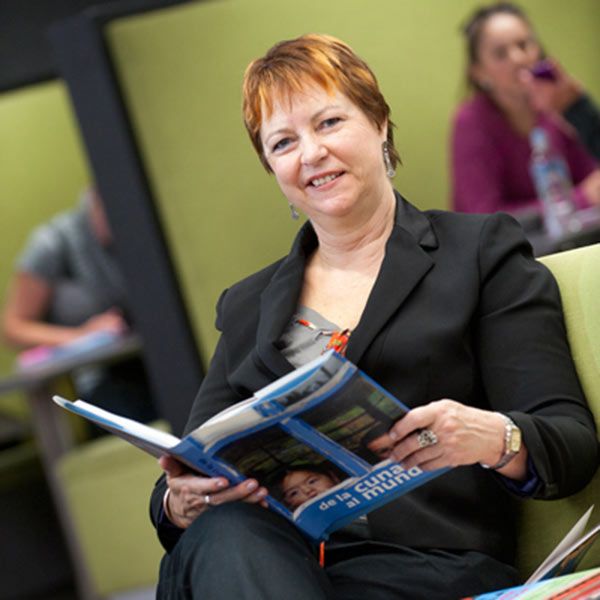
Associate Professor Linda Newman
Associate Professor Linda Newman forged an interest in social justice while working as an early learning centre Director in the 1970s, when she realised that children with disabilities were not well catered for in mainstream early childhood education.
Her development of some of the first centre-based and outreach programs to bridge that gap eventually led to a new direction as an early childhood intervention teacher, then teacher educator and research academic. Several decades on, those principles remain a driving force in her voluntary work.
Linda’s research agenda has taken her to places as diverse as Chile and South Africa - and often to the poorest parts.
"My research interests have always been closely aligned to my work with children, families and teachers, and more recently curriculum, pedagogy, early literacy and practitioner research" says Newman, whose doctoral studies into professional ethics led to the development of the widely used Ethical Response Cycle (ERC, Newman & Pollnitz, 2022), available in Newman & Pollnitz (2005). Working with Children and Families: Professional, Legal and Ethical Issues. The ERC is now being used in New Zealand school.
Newman was an investigator on an overseas project called Futuro Infantil Hoy (loosely translated as Children's Futures Today), which was focused on building engagement between communities and early childhood centres in very poor neighbourhoods in the port city of Antofagasta, in northern Chile.
"Despite the extreme poverty, they do have early childhood centres and university-qualified staff, but there had been no tradition there of encouraging families to be involved in their children's education and support their learning at home," Newman says.
Newman and colleagues from the University of Western Sydney, her former employer, worked alongside the centres introducing teaching methods and initiatives that promoted family involvement, such as inviting parents to workshops and documenting children's work with digital photography. These measures led to increased confidence in the work of the centres and better learning outcomes.
"It helped raise expectations: parents were saying to us, 'I can see a future for my child,' "Newman says.
The project fostered international collaboration, with a study team from Chile visiting Newcastle, and Newman says the research had wide application beyond the community in which they were working. It also led to a co-edited book about Practitioner research called Practitioner Research in Early Childhood: International Issues and Perspectives (Newman & Woodrow).
Linda is now an Honorary academic with release from full time teaching allowing her to engage in voluntary work beyond the university. She was recently invited to testify at the NSW Senate inquiry into child safety in early childhood centres. She is an Independent Board Director for Western Sydney University Early Learning Ltd and is Chair of their Research Partnerships committee. She is also Chair of Early Childhood Inclusion Group Advisory Board.
Circling back to her early days of teaching Linda is co-leading a project to document the early history of Lapstone Preschool and its outreach early childhood intervention programs. It was a highlight to recently re-connect with colleagues and parents whose children attended the preschool in the 1980s.
Linda is no longer able to accept new PhD students.
The University of Newcastle acknowledges the traditional custodians of the lands within our footprint areas: Awabakal, Darkinjung, Biripai, Worimi, Wonnarua, and Eora Nations. We also pay respect to the wisdom of our Elders past and present.