
A mosquito-driven mission
A University of Newcastle competition was the catalyst for an e-commerce clothing business aimed at protecting people from mosquito-borne diseases.
Socially conscious customers are turning to businesses that give back – from Australian startups like Who Gives a Crap and Thank You, to American footwear brand TOMS.
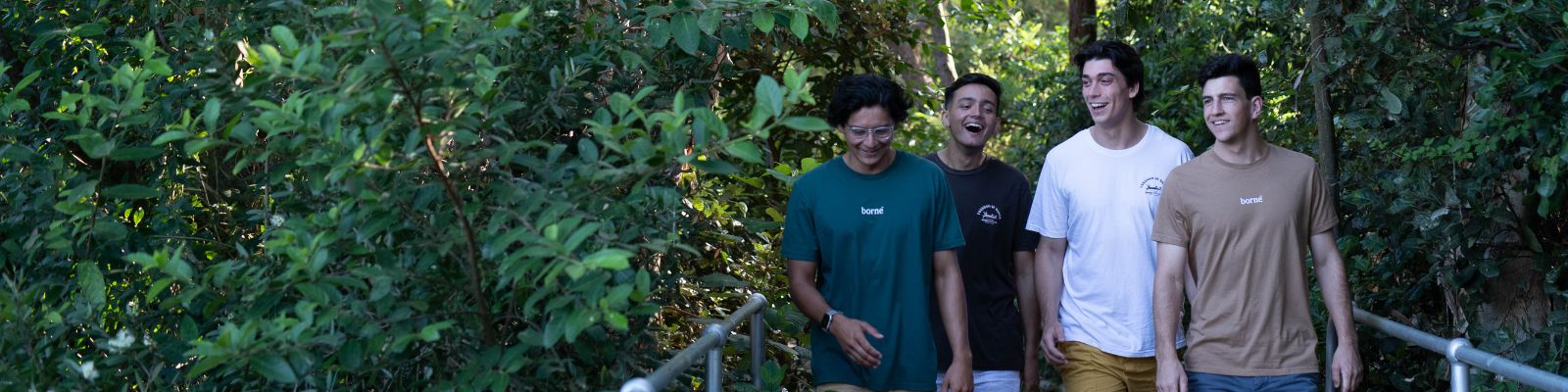
This conscious consumerism sparked an idea in the minds of four mates from Newcastle who won the University’s first-ever Grand Challenge competition aimed at addressing the global problem of mosquitoes.
The team – made up of two junior doctors, an engineer and a graphic designer – started exploring possible solutions at the University of Newcastle’s Callaghan campus, where mozzie bites are an itchy nuisance for staff and students throughout much of the year. Three of the four teammates studied at the University’s bushland campus and were all too familiar with the constant battle between man and mosquito.
They also knew that the tiny insect posed big health threats to communities in other parts of the world, as the mosquito is the primary carrier of malaria. In 2024, more than 260 million people across 83 countries contracted malaria, and nearly 600,000 people died from the disease.1
Driven by a desire to reduce infections and deaths, the team came up with an idea for a social enterprise – one that would produce and sell mosquito-repellent clothing while also supporting community organisations committed to curbing mosquito-borne diseases.
The result was Borne Clothing, an e-commerce startup that sells odourless, non-toxic, mosquito-repellent shirts and hats treated with permethrin.
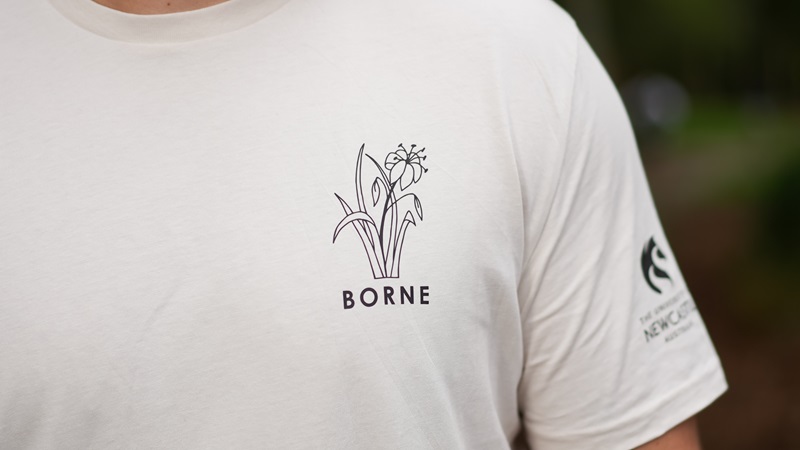
Based on natural extracts from the chrysanthemum flower, permethrin is a safe and effective repellent approved for use in Australia by the Australian Pesticides and Veterinary Medicines Authority.
The permethrin treatment is bound into the cotton fibres of Borne Clothing products – which means it stays in the clothing rather than on it and doesn’t wash away or rub off on skin. In fact, the clothing has been proven to remain effective against mosquitos for up to 70 standard washes.
The Borne products keep mozzies away from areas of the body covered by the apparel, and the permethrin treatment also helps reduce mozzie bites on nearby exposed areas of skin, such as the forearms and neck. In addition to combating mosquitos, Borne Clothing has also been registered to repel ticks, sandflies, ants, midges and fleas.
Impact
- To honour their commitment to socially responsible commerce, the Borne Clothing founders have committed to donating half of their net profits to United to Beat Malaria and the Malaria Consortium.
- In 2022, the company selected Avenue – an Australian social enterprise that supports people with a disability – to be its order fulfillment partner, thereby providing vocational and skill development opportunities to people with disabilities.
- Borne Clothing’s original founders sold their startup venture in March 2025. It’s now a veteran-owned company whose founder spent more than a decade in the Australian Defence Force. The new owner is continuing the company’s purpose-led vision. Not only is it donating a percentage of profits to global health issues, but it’s also introduced a new Tully Tee in army green – a nod to defence personnel and a continuation of Borne’s core values: purpose, practicality and respect.
- The company’s founders are using skills gained from the Borne experience to help achieve global health equity and realise a future where people live free of preventable disease. One of the founders is now the Chief Strategy Officer for the Africa Healthcare Network, where he’s leading efforts to expand access to renal care in Africa. Another is working with the Lead Exposure Elimination Project, a not-for-profit organisation in the UK that aims to eliminate lead poisoning across the globe.
1World Health Organisation December 2024
Last updated August 2025
More information:

Bal Dhital, co-founder
Malaria kills too many children each year. We wanted the clothing to connect communities through the universal experience of a mozzie bite and help get preventive tools to the right people.
Aligned with the United Nations Sustainable Development Goals

Read more research impact case studies
The University of Newcastle acknowledges the traditional custodians of the lands within our footprint areas: Awabakal, Darkinjung, Biripai, Worimi, Wonnarua, and Eora Nations. We also pay respect to the wisdom of our Elders past and present.