

Architecture that listens to its environment
Growing up on the New South Wales coast, Mitchell developed a strong connection to the ocean and natural landscapes, a relationship that continues to shape how he designs today. “My work focuses on creating architecture that listens to its environment, responding to local stories, landscapes, and people,” he says.
Mitchell’s interest in making and creating started even earlier. Surrounded by family involved in building, renovation, and hands-on craft, he saw design as something both practical and creative—a way to solve problems, shape spaces, and make life better for people. That mix of creativity, technical thinking, and community connection naturally led him to architecture.
After completing a Bachelor of Design (Architecture) and soon graduating from the Master of Architecture at the University of Newcastle, Mitchell reflects on his experience at the University and how it has prepared him for a bright future.
Throughout his studies, Mitchell embraced the hands-on, collaborative studio culture that defines architecture at the University of Newcastle. “The way the studio was run really attracted me… the collaborative, hands-on approach to design felt different from anywhere else.” The environment offered space to experiment, test ideas, and learn from peers and mentors. He describes the studio culture as “incredibly collaborative, you spend long hours working alongside the same group of people, and those shared experiences naturally build strong friendships.”
Mitchell says his degree has prepared him to design with intention and critical awareness. “Studying at the University of Newcastle taught me to think critically and design with intent.” Engaging with community, learning from Country, and understanding regional context have become central to how he works - skills that will continue to guide his future career.
Mitchell now works in practice, gaining experience across residential and community-focused projects. Throughout his studies he worked part-time in industry, which gave him real-world experience in design development, 3D modelling and visualisation.
His exhibition piece for the 2025 Master of Architecture End of Year Exhibition brings together his personal history, design values, and deep understanding of place.
Mitchell’s thesis project, “(Re)Tracing Karuah,” centres on the riverside town of Karuah, a community his family has lived in for four generations. The work explores how architecture and planning can guide development in regional towns in ways that honour history, identity, and changing needs. “The project investigates how architecture and planning can guide development in regional towns in ways that respect both history and changing needs,” he explains.
Inspired by local stories, oyster farming traditions, and the layered history of Worimi Country, the project proposes a series of architectural and landscape interventions along the river’s edge, from community spaces and oyster co-ops to small hospitality and accommodation offerings. Each element is designed to reconnect people with the tidal river system and celebrate the town’s cultural identity. “The project is deeply site-specific,” Mitchell says. “It responds to Karuah’s tidal river system, its shifting economy, and its layered history.”
Much of the project is grounded in Mitchell’s personal connection to the place. “It was inspired by my own connection to Karuah and the stories of its people, from local residents and oyster farmers to my own family history on the river.” It’s a thoughtful, grounded investigation into how small towns can evolve while preserving the character that makes them unique.
Beyond the design itself, Mitchell hopes the work encourages others to approach regional development with care. “I hope people see the value in slowing down and listening to place,” he says. “‘(Re)Tracing Karuah’ isn’t about large-scale change, it’s about understanding local identity, celebrating community stories, and designing with care for both people and the environment.”
As he looks ahead, Mitchell is excited by the tangible impact architecture can have. “It’s rewarding to see design ideas turn into built outcomes that improve how people live, connect, and interact with their environment.” And as he steps into the profession, his exhibition project stands as an example of the thoughtful, place-led approach that defines the next generation of architects.
(Re) Tracing Karuah - Mitchell Hosking
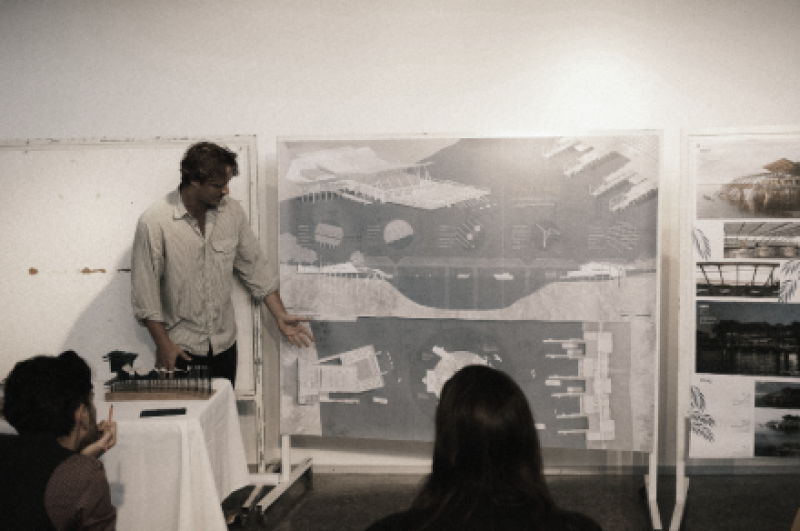
Mitchell Hosking presents architectural plans on a board to a seated audience. The atmosphere is focused, with detailed drawings and diagrams on display.
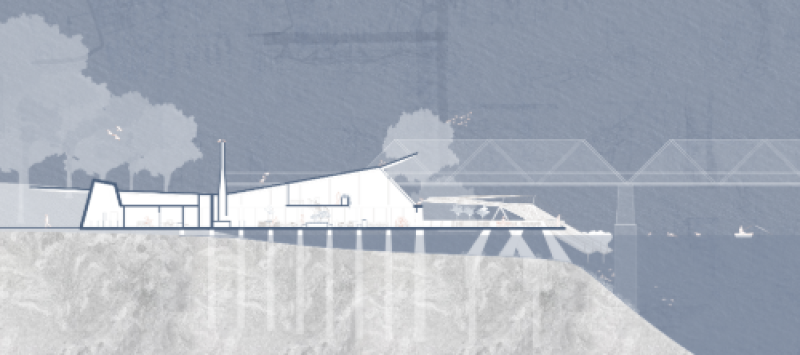
Cross-section architectural illustration of a sloped-roof building by a bridge. Features trees, water, and a small boat, creating a serene tone.

A modern building with slanted solar panels extends over calm water at sunset, reflecting warm orange hues. A peaceful and innovative architectural scene.
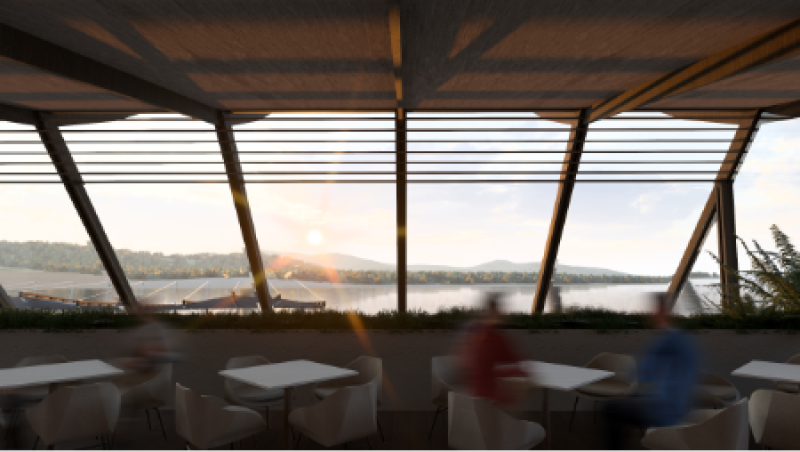
Sunlit dining area with large windows overlooks a serene lake and distant hills. Blurred figures sit at tables, creating a relaxed ambiance.
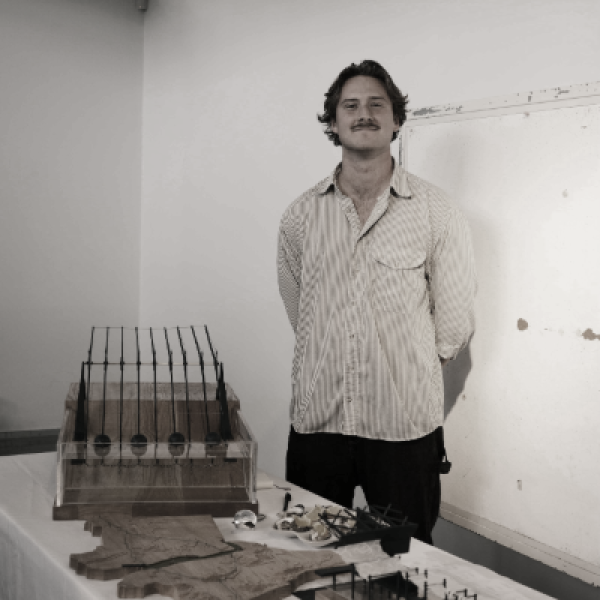
Mitchell Hosking
How Mitchell’s Master of Architecture thesis reconnects a regional community to its river, stories and future.
I hope people see the value in slowing down and listening to place.
Inspired by Mitchell's story?
Study a Master of Architecture today
The University of Newcastle acknowledges the traditional custodians of the lands within our footprint areas: Awabakal, Darkinjung, Biripai, Worimi, Wonnarua, and Eora Nations. We also pay respect to the wisdom of our Elders past and present.