
Finding the degree that changed everything
Sometimes the right study path isn't the one you expected.
For Gabi Donoghue, returning to study through a Diploma of Arts and Social Science opened the door to something she hadn't planned for, a passion for social sciences and a future focused on creating positive change in communities.
The Diploma gave Gabi the opportunity to explore the discipline before progressing into a degree.
"Having the flexibility of getting a taster for the degree through the Diploma of Arts and Social Science really secured my enrolment into studying with the University of Newcastle," Gabi shares.
From there, Gabi went on to complete her Bachelor of Social Science, building on her passion for people, communities and creating positive change.
"The skills and knowledge I have gained in my time studying social science at the University of Newcastle directly relates to my passion in working with local and overseas communities."
"It's during this time I gained perspective, critical thinking skills and global networks that will allow me to pursue my dreams in community development and evoking positive change in people’s lives and communities."
When Gabi first started university, sociology was completely new to her.
One subject, however, changed everything.
"I loved Introduction to Social Sciences. I really was very new to the discipline, had no idea what sociology really meant."
"I really felt like it was a perfect subject to spark my now obsession with the social sciences, and the class that confirmed I had finally found my path."
As her degree progressed, she enjoyed seeing how classroom theory connected with real-world research.
"I really loved the Applied Quantitative Research SOCS2400 subject."
"It was one of the first practical classes that allowed me to interact with real data and explore programs and formulars that real sociologists use."
Learning from academics actively working in the field has also been a highlight.
"I have really loved hearing about the work that each of my lecturers have undertaken, especially those that partake in work that aims to decolonise or decapitalise knowledge and the way we practice as sociologists and anthropologists."
"I have also loved engaging with Feminist thought, and how decolonisation and feminism can come hand in hand."
For Gabi, one of the biggest takeaways from her degree has been learning how to think differently about society and the challenges communities face.
"My time in the social science degree has given me the tools to properly explore concepts and social issues, and how to go about implementing change in ethical and methodical ways."
Those skills would go on to become an important part of Gabi's career.
Returning to study as a non-school leaver meant finding a degree that could fit around work and other commitments.
Gabi says the flexibility of her studies helped make that possible.
"With this degree, I was able to enrol in full-time study and still balance my work and lifestyle with the courses."
"I usually only had to be on campus 1-2 days a week, giving me so much time to volunteer and take job opportunities with the University as well."
Along the way, Gabi's hard work has been recognised with the Diploma Prize for Academic Excellence in 2024.
Receiving the award and later being invited by the Vice-Chancellor to deliver her speech at the University's All-Staff Forum, was a moment she never imagined.
"In all my life I never thought I would receive awards for academic merit or be able to speak in front of a group of people or an audience of hundreds of people."
"This is a true measure of how far I have come with the University of Newcastle."
Since graduating with her Bachelor of Social Science, Gabi's career has continued to evolve. After turning a degree placement at her local Community Centre into a role as a Community Development Officer, an unexpected conversation opened the door to social research, a field she had already pictured herself pursuing during her studies.
Today, Gabi is working as a Research Assistant at Western Sydney University, contributing to projects focused on culturally safe midwifery care for Aboriginal mothers and babies and creating more culturally safe education pathways.
"Not only am I working in a space that ignites real change, but I get to work in a team of the most inspiring women everyday who are continuously empowering me to challenge myself, take on leading roles and network in the wide world of research."
Looking back, Gabi sees her education, practical experience and volunteering as important parts of the journey that brought her to where she is today.
"I continue to remind myself that it's not just luck that brought me here, but the years of hard work, practical experience, volunteering and education that has allowed me to settle in and excel in what I do."
From returning to study to graduating and beginning a career in social research, Gabi's journey hasn't always followed the path she expected.
For anyone thinking about returning to study, Gabi encourages them to back themselves.
"Returning to study something you are truly passionate about is one of the best decisions you will ever make, as you have the life experience to back you, and the confidence to not only pass, but excel in your dream career path."
And when it comes to what happens after university, Gabi encourages graduates to stay open to where their journey might lead.
"The journey will change (a lot!), and your first job outside of university might not be what you planned, but you have to take the leap and trust the process because you'll never know what you're capable of until you try!"
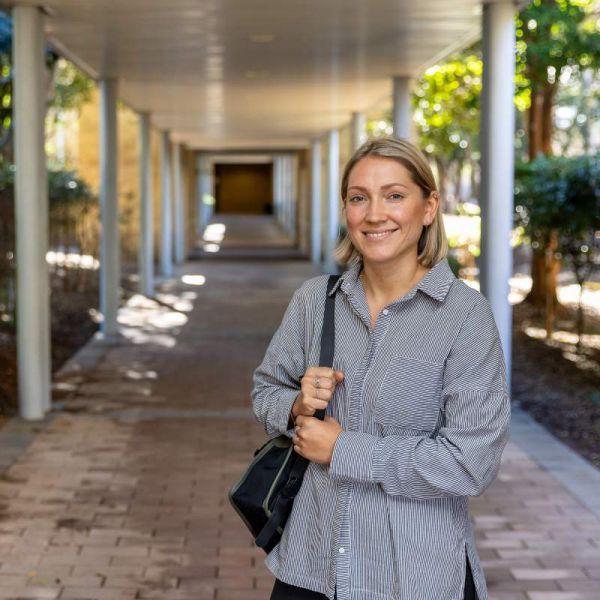
Gabi Donoghue
Gabi didn't know sociology would become her passion. Now she's using the skills, confidence and perspective gained through a Bachelor of Social Science to create positive change through social research.
My time in the Social Science degree has given me the tools to properly explore concepts and social issues, and how to go about implementing change in ethical and methodical ways.
Inspired by Gabi's story?
Study a Bachelor of Social Science today
The University of Newcastle acknowledges the traditional custodians of the lands within our footprint areas: Awabakal, Darkinjung, Biripai, Worimi, Wonnarua, and Eora Nations. We also pay respect to the wisdom of our Elders past and present.