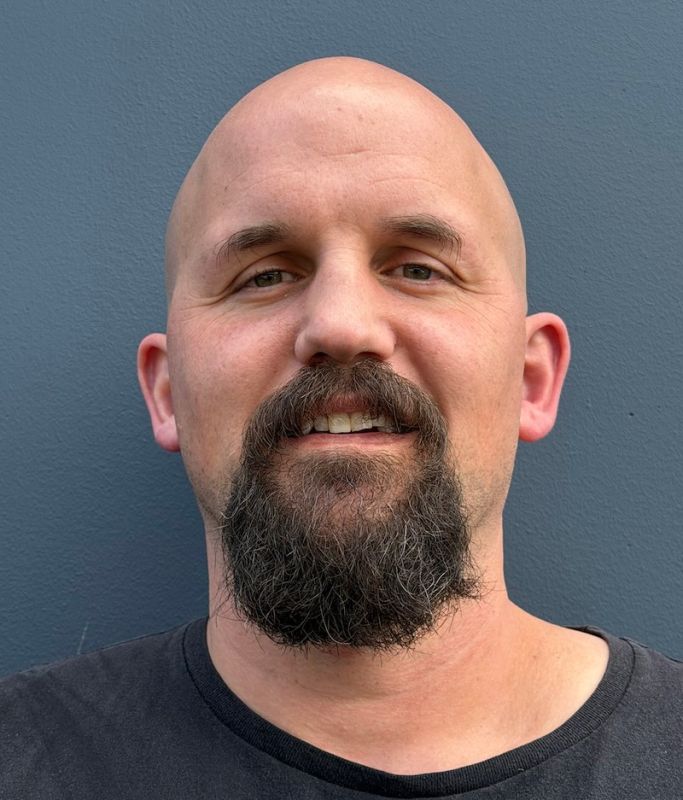
For most of his life, Anthony Steed has had to plan his conversations – even the everyday ones. “I’ve lost count of the number of times I’ve gone into a café and ordered something I didn’t want because it was all I could manage to say at the time.” His stutter influenced the kind of work he chose. Overnight shifts as a disability support worker reduced the need to talk. He put off getting a mobile phone for as long as possible. “I had extreme phone phobia because my voice would have to carry the whole message.”
Today, Anthony’s stutter is barely detectible. He occasionally pauses while speaking down the line from Hobart, but no more than anyone else who is focused on gathering their thoughts. At 40, decades of shame and self-loathing have been replaced by a hard-won confidence that he attributes to two fourth-year University of Newcastle Speech Pathology students. “I knew this was my last shot (to overcome his stutter), so I booked flights and an Airbnb and spent a week in Newcastle.”
Anthony travelled to Newcastle in January 2024 to attend the University’s Stuttering Clinic, one of five specialist speech pathology clinics available at no cost to people from across Australia.
More broadly, the Speech Pathology Clinic is one of 14 community clinics managed by the University. Each year, 750 students gain vital experience in a supervised setting and the clinics support 5000 people with free or low-cost services across law, allied health, psychology, and taxation.
Anthony had already made several attempts to overcome his stutter, including a 2020 visit to the University’s clinic just before Covid upended our lives. “Within a week of being home the stutter returned and I was back to where I started,” he says. “I had a taste of the one thing I’d wanted all my life, and I went to a dark place.”
Last year, something shifted. “My partner was really worried about me going back to Newcastle because when the stutter returned last time, I was miserable,” he recalls. “I understood why she was concerned but I gave it everything I had because I didn’t have another attempt in me, and the students knew it.”
Anthony attended daily, intensive appointments at the Stuttering Clinic located at the University’s Callaghan campus. About 100 students participate in clinics in the final year of the four-year degree.
“It’s a really supportive environment, they’re getting a real-world experience with supervision, and staff have the time to provide feedback.”
- Lecturer and Practice Education Convenor Joanna Walters
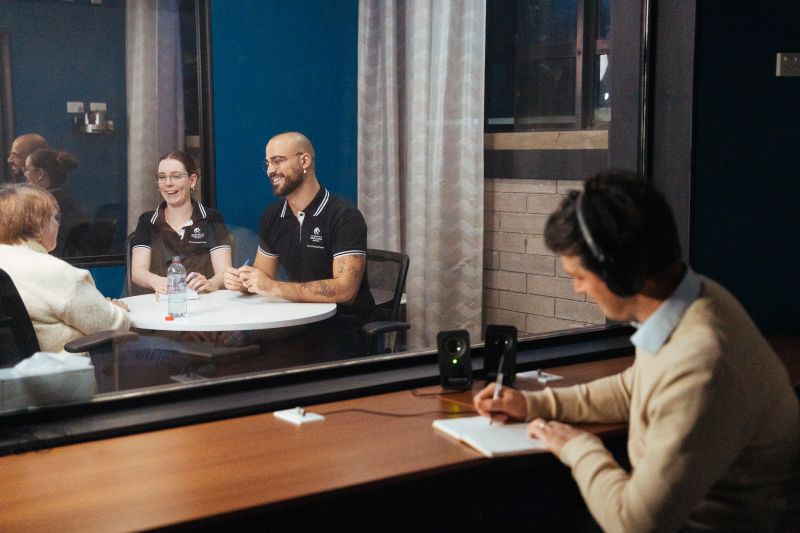
To assist with supervision, the clinic has observation facilities such as an AV system that enables staff to listen in on appointments and an observation room behind a one-way mirror window. “From the student point of view, it allows them to practise thinking on their feet and with constant feedback, they’re able to problem-solve and improve,” adds speech pathologist and practice educator Monica Anderson. “I don’t want to wait until the end of the day if they’re off track, (so) I can just tap on the door and speak with them.”
In second year, students also go into primary schools one day a week for 20 weeks (up to 15% of Australian children have an issue with their speech). For some university students, it is the first time they have meaningfully interacted with young children. For student Karla Anom, the clinics have enhanced her training sparked her interest in paediatrics – she has already secured a contract for 2026 when she completes her degree. “It’s quite different to reading theory,” says the 23-year-old who has been working with pre-school-aged children at the clinic during her final year. “I am speaking to parents as well and the program is helping me become more confident.”
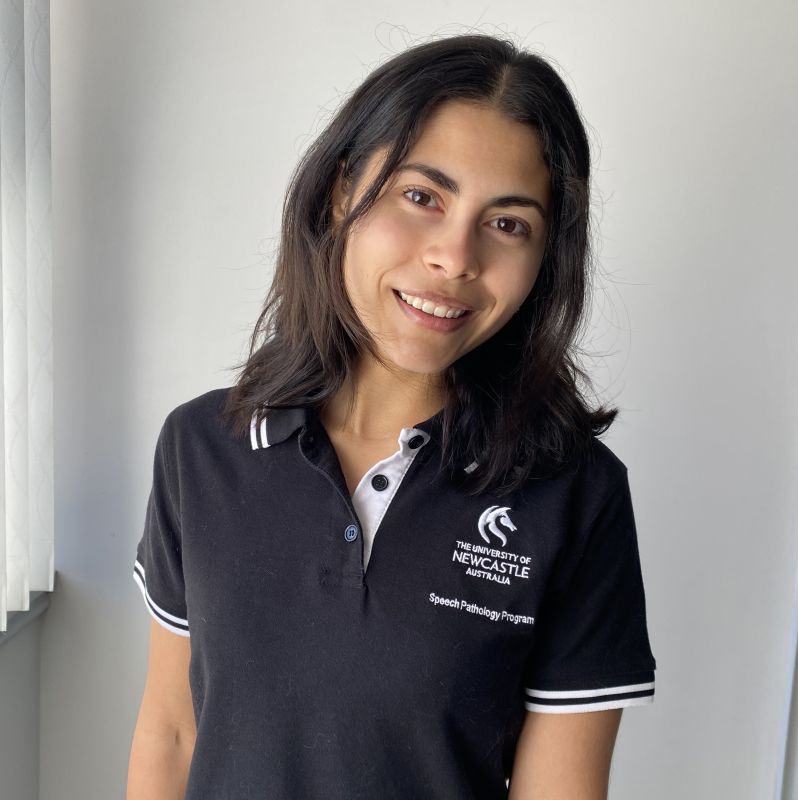
In second year, students also go into primary schools one day a week for 20 weeks (up to 15% of Australian children have an issue with their speech). For some university students, it is the first time they have meaningfully interacted with young children. For student Karla Anom, the clinics have enhanced her training sparked her interest in paediatrics – she has already secured a contract for 2026 when she completes her degree. “It’s quite different to reading theory,” says the 23-year-old who has been working with pre-school-aged children at the clinic during her final year. “I am speaking to parents as well and the program is helping me become more confident.”
“We’re value adding to some of the services that already exist,” says Joanne. “And with our more specialist clinics, we’re offering a service that health and education can’t provide. Ultimately, we want students to have skills.
The University of Newcastle is one of the few universities with specialised speech pathology clinics, which is why clients such as Andrew travel from around Australia. Others are supported via telehealth appointments, another learning opportunity for students who must get on top of the technology and support clients to as well. “Our focus is the integration between the academic program and clinical program – putting knowledge into practice,” offers Joanne.
When Sarah Breusch finished her law degree at The Australian National University, she saw her first “flesh and blood client” on her first day on the job. As the Director of the University of Newcastle’s Legal Centre, she now oversees five student-led clinics including Law on the Beach, a free legal advice clinic held at Merewether Surf Club each January and February. “It is so much better dealing with real clients than simulated situations,” says Sarah. “Students meet people where they’re at and see firsthand the impact of intergenerational trauma, family violence and homelessness.”
Student Keeley Cobcroft, 21, was nervous about interacting with clients for the first time, but after participating in Law on the Beach she gained more confidence. “I got to see how the law works in practice and not just in textbooks,” she says. The experience also opened her eyes to how overwhelming the legal system can be, especially for those living on the margins. “People said they could never have afforded to pay for a lawyer,” she says. “It really hits you in the heart.”
Students also complete placements with external law firms, but it can be difficult for busy professionals whose primary priority is servicing clients to spare the time required to provide meaningful supervision. “We have the time because we’re not juggling our own clients,” says Sarah.
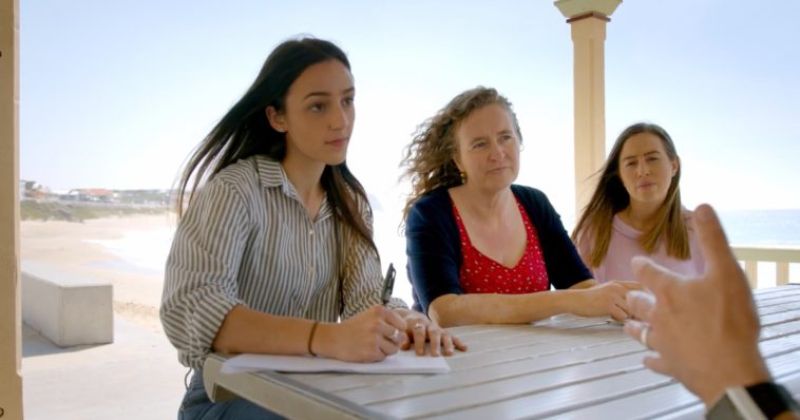
Other services provided by the University include a free legal clinic at the inner-city Nuspace campus and an older persons clinic, which provides free legal advice and assistance to people aged 60 years and over and to Indigenous people aged 50 years and over. Last year, 541 people attended a Legal Centre, and 131 students gained vital professional experience.
Pensioner Clare Smith* sought free legal advice after her son died without leaving a will. “He had changed his name, which made the whole process that more difficult,” she says. “I found the students more than willing to listen and learn all they could from our meeting. I was impressed with them all. They saved my sanity.”
A key aspect of Legal Centre appointments is to help steer people in the right direction, so they aren’t overwhelmed. “We see ourselves as a triage service,” says Sarah. “Some people don’t know where to even start and we help them by guiding them to the right area. Of the 1000 clients we see, we take on approximately a third to do further legal work. In assessing whether to take them on, we look at need for those who can’t afford it, and it must present a learning opportunity for our students and be within our resources.”

Clare, who lives in Newcastle, believes there are others like her who aren’t aware of the variety of clinic services available through the University. “It’s a far more valuable service than the community realises.”
The twin goals of the clinics – to provide essential services to the community while supporting the professional development of students – are embedded across the University.
“We’re incredibly proud of our community clinics — they’re changing lives every day. By working hand-in-hand with the communities we serve, we’re not only delivering essential services but also creating transformative learning experiences for our students. It’s a powerful model of education in action – grounded in care, connection, and contribution”
- Senior Deputy Vice-Chancellor (Academic), Professor Belinda Tynan.
For Anthony, the UON Speech Pathology Clinic has been life changing. Since his Newcastle visit last year, he has moved to day work and can now spend more time with his two children. He no longer tells lies to avoid social events. His café order is also spot on. “I can speak without tension. I wish everyone with a stutter could experience the freedom I have now.”
* Name has been changed to respect confidentiality.
Community impact
In 2024:
- 5,100 people accessed 14 free and low-cost student-led Community Clinics
- 12,400 appointments
- 750 students gained real-world experience
- Clinics include oral health, occupational therapy, psychology, podiatry, tax, and dietetics
Discover the full range of our Community Clinics
Read more
Explore our wide range of undergraduate, postgraduate and research degrees
Read more
Aligned with the United Nations Sustainable Development Goals


Related Articles
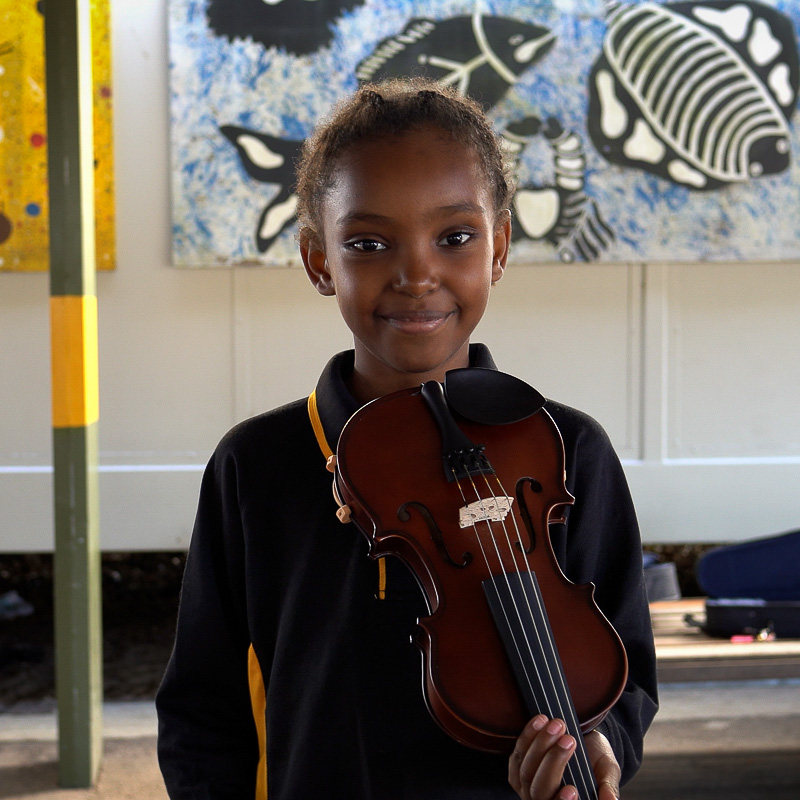
Speaking in Strings
Music has a unique power to bring people together, transcending language and cultural differences. Supported by the University of Newcastle, the Jesmond Strings Academy is providing opportunity for students to build connection, belonging and confidence through a shared love of music.
Read more

‘Mum and Dad both finished school in Year 10’ - How to help first-in-family students graduate from uni
Each year, about 30% of new undergraduates in Australia are the first in their families to go to university.
Read more
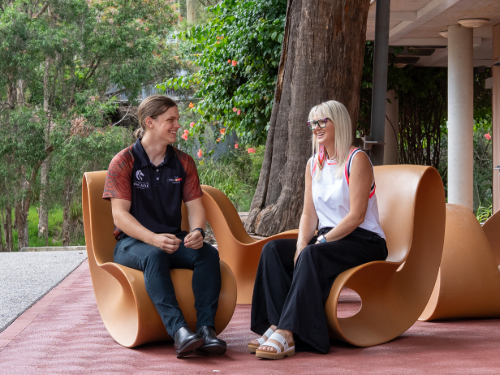
This uni program is changing the game for mob
From one students’ first time in a classroom to a mum-of-three’s return to learning, these real-life stories show what’s possible when universities open doors and open minds.
Read more

More and more Australian families are homeschooling. How can we make sure they do it well?
Across Australia, more families are choosing to homeschool.
Read more

Pathway to purpose
From limited beginnings to limitless dreams - equity in education is giving Arthur Demetriou the chance to change the face of medicine.
Read more

Teaching the Hunter
Eric Roach was just 19 when he graduated from Newcastle Teacher's College in 1953. His time there launched a career that would span almost four decades, and instilled in him a passion for teaching that would transcend generations.
Read more