Marwa and Sumah confer together in the playground, whispering Dari into one another’s eager ears. They giggle at the other’s suggestion of what to say in response to the question ‘what do you want to be when you grow up?’.
I want to be a violin teacher just like Miss Portelli so I can teach others how to play violin - Marwa
Dari is just one of the multitude of languages that can be heard as you walk across the school yard at Jesmond Public School in Newcastle, NSW.
With 75 per cent of the school’s student population from culturally and linguistically diverse (CALD) families – and half of those from refugee backgrounds – the school’s multicultural hum is an impressive representation of the suburb’s diverse makeup.
Marwa and Sumah’s families both hail from Afghanistan. The year 3 classmates have found comfort in each other’s presence at school – safe to converse freely in their mother tongue.
Despite some animated discussion and playful elbowing over correct pronunciations, the girls align on one important thing:
“I want to be a teacher when I grow up because I want to teach kids like how my teacher teaches me,” Sumah states with a smile.
“I want to be a violin teacher just like Miss Portelli so I can teach others how to play violin,” Marwa expands with a grin.
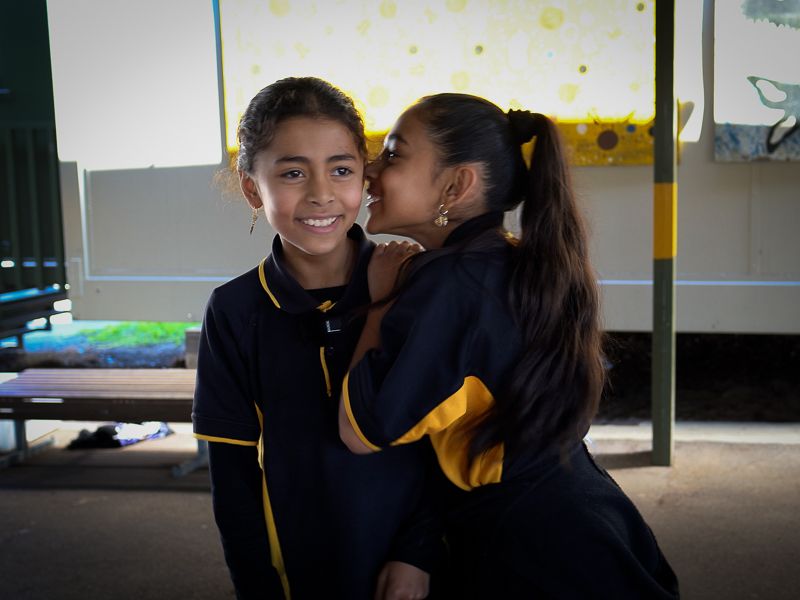
Sumah and Marwa both aspire to be teachers
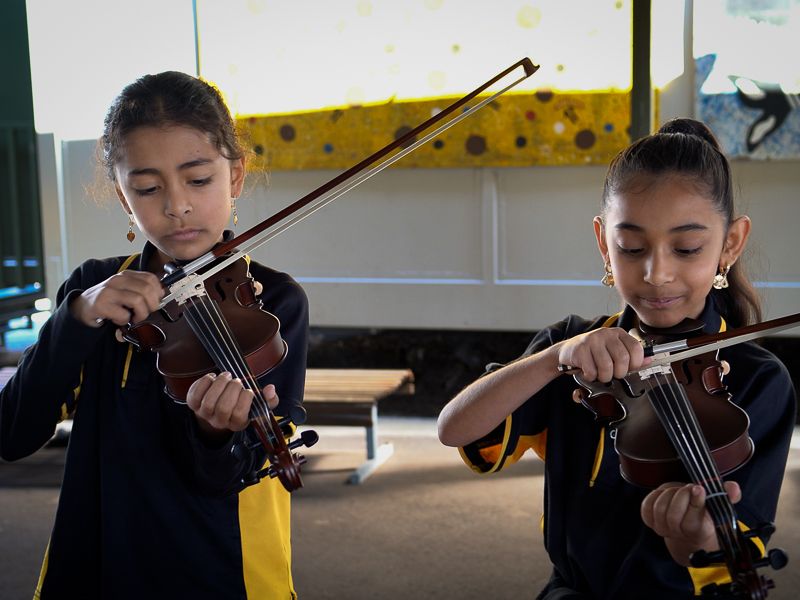
Sumah and Marwa play A, B and C#
It’s Friday at Jesmond Public, which means that – in between the squeals of students gearing up for another weekend – an additional dialect can be heard at school today. It’s one without words but globally recognisable.
Music.
Much like the subject she teaches, Bernice Musu Portelli’s voice carries across the classroom like its own song as she flits from one student to another, helping them tune their instruments and find their seats.
Her passion, enthusiasm and affection for the children are clear from the moment she steps into the tight, demountable space (which has been eagerly set up for the weekly class by helpful year 3 hands ahead of her arrival).
The admiration is mutual.
It’s so rewarding when you see the students grow in their skill - Bernice Musu Portelli
A decorated strings musician, Bernice moved to Australia from Malta with English as an additional language just four years ago. Each Friday, she travels to Newcastle from her home on the Central Coast to teach the Jesmond Strings Academy.
Funded by the University of Newcastle’s Conservatorium of Music, Bernice delivers weekly violin and cello lessons to the buzzing year 3 classes who have been chosen for the endeavour.
Many of the students in the room had never seen a violin or cello before they were presented with one of their own at the beginning of 2026.
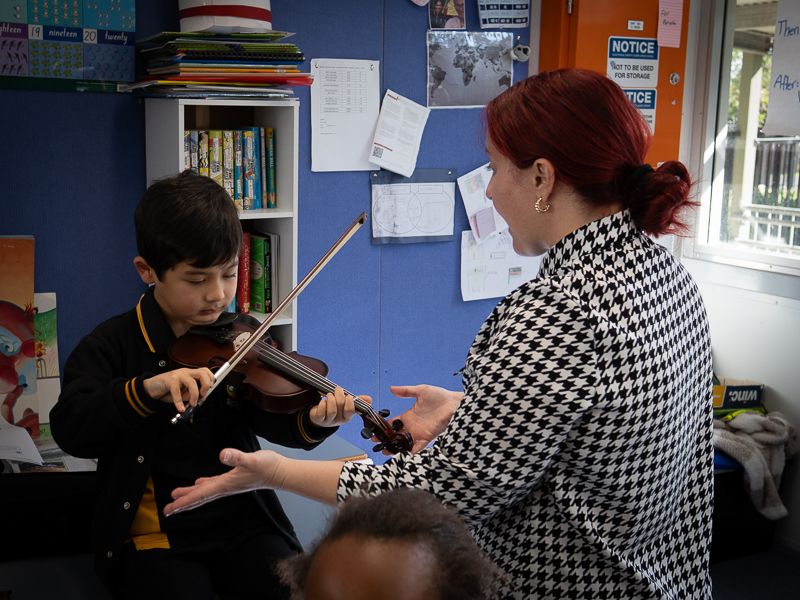
Bernice assists Sina with the violin
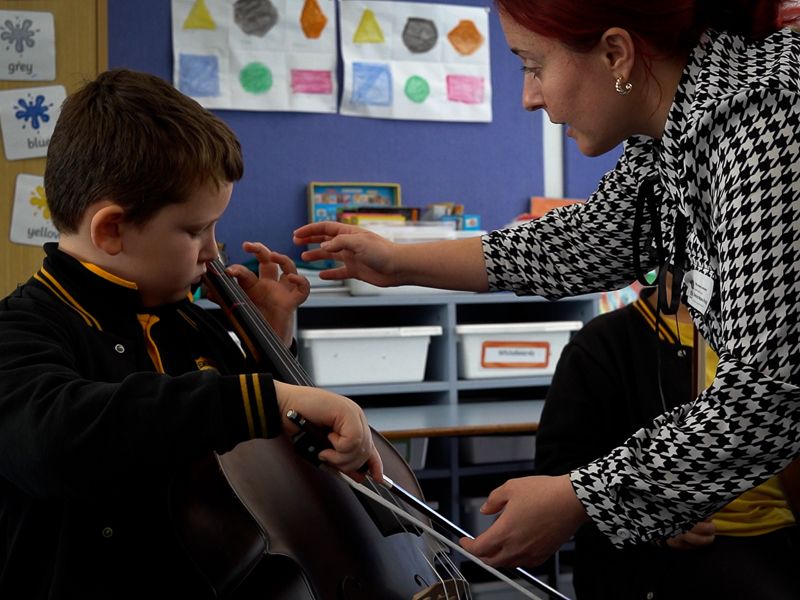
Bernice perfects Nate's fingers on the cello
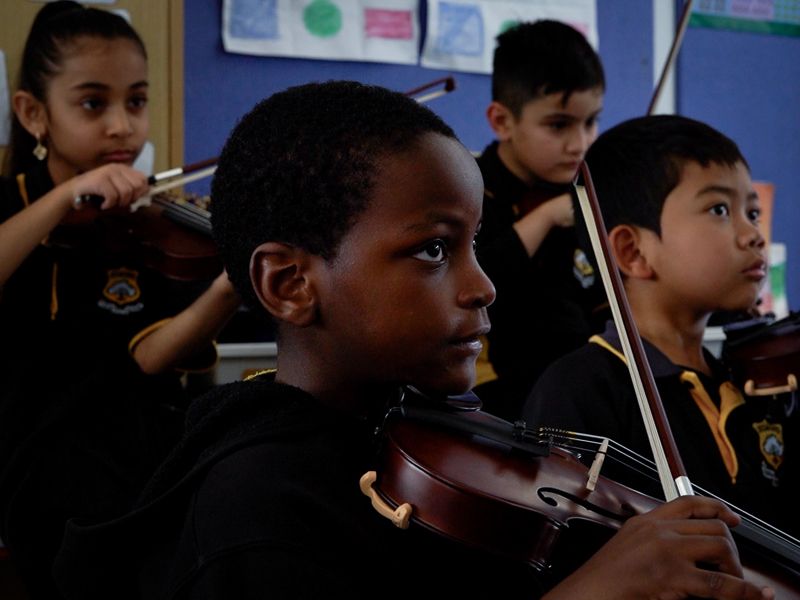
Marwa, Elliot, Hussain and Eshan
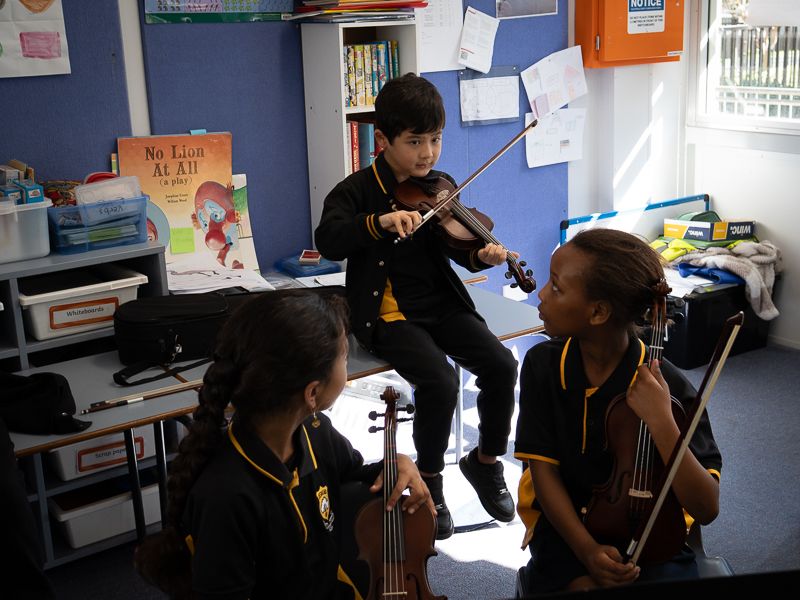
Sina tries the solo
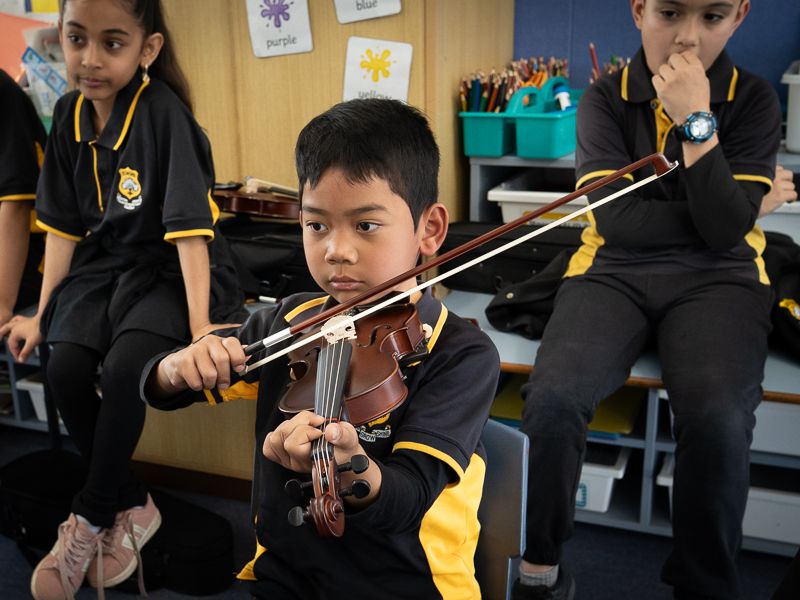
Eshan tries his hand at a violin solo
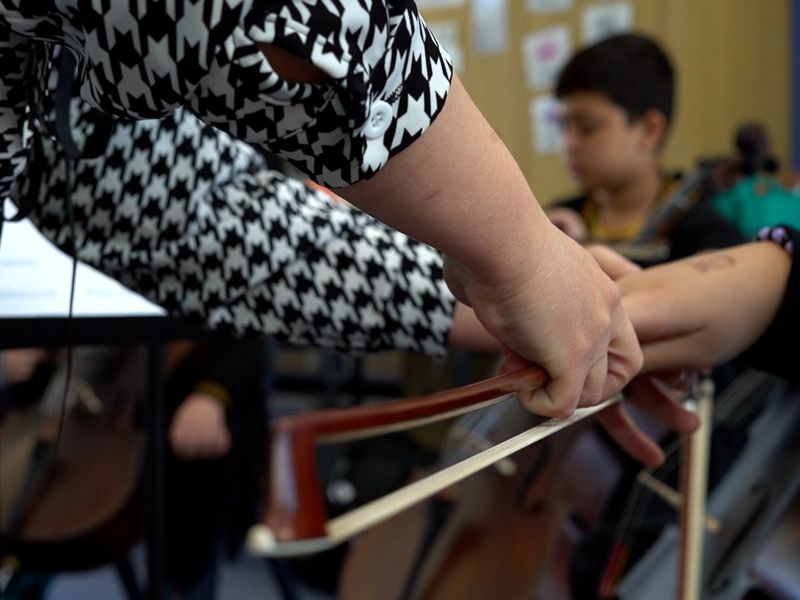
A helping hand on the bow
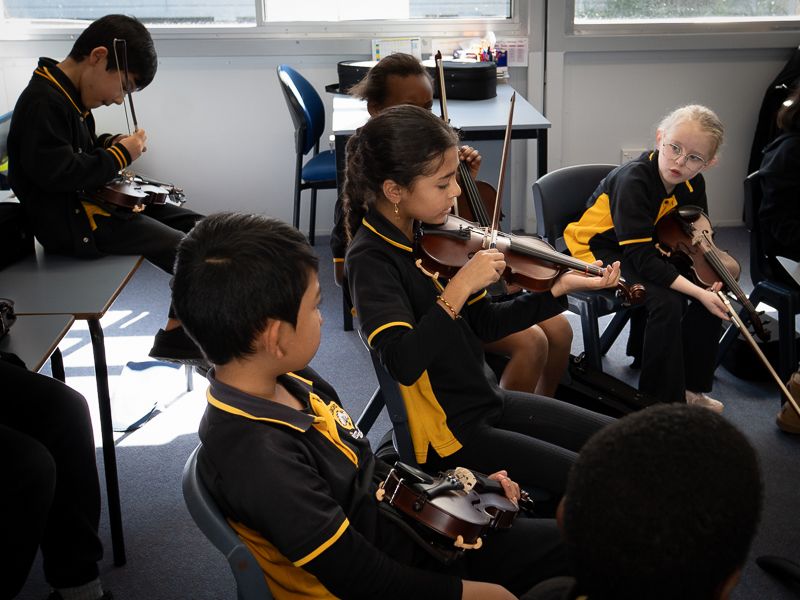
(L to R) Sina, Eshan, Suman and Milla listen to Sumah's solo
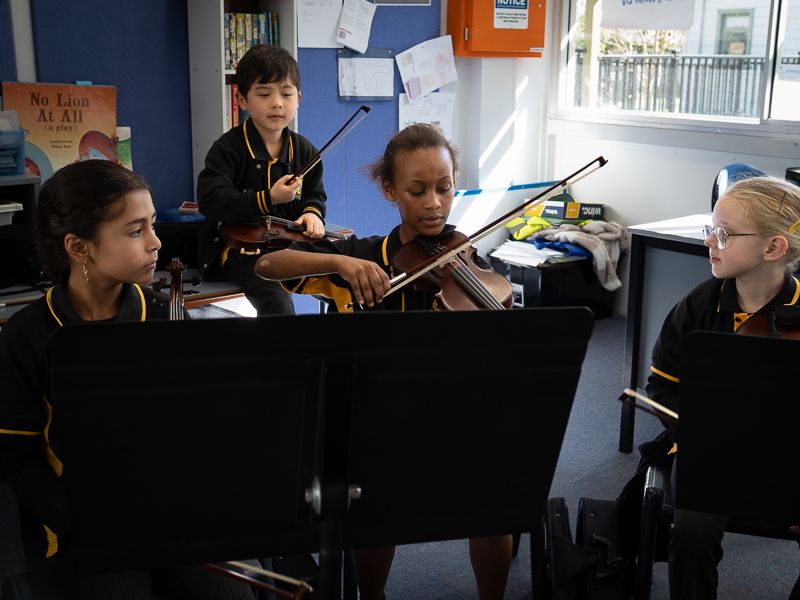
Sumah, Sina, Daniella and Milla
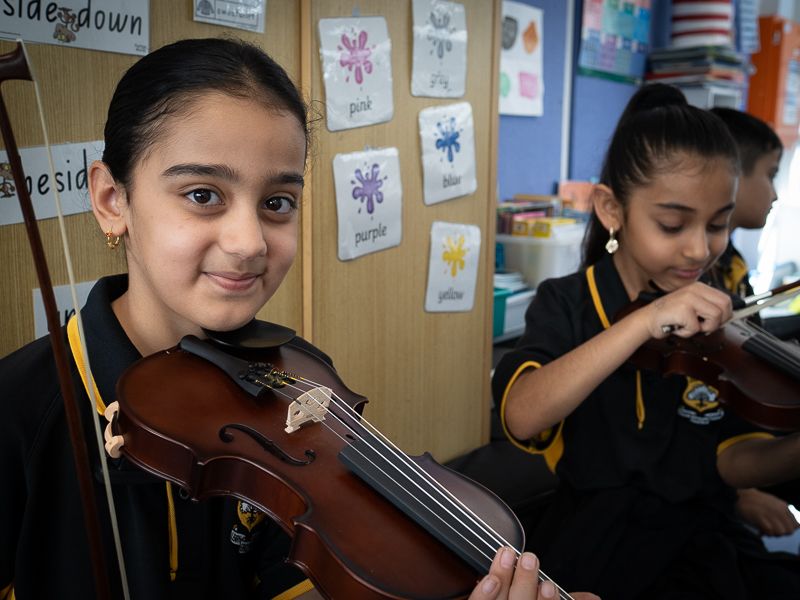
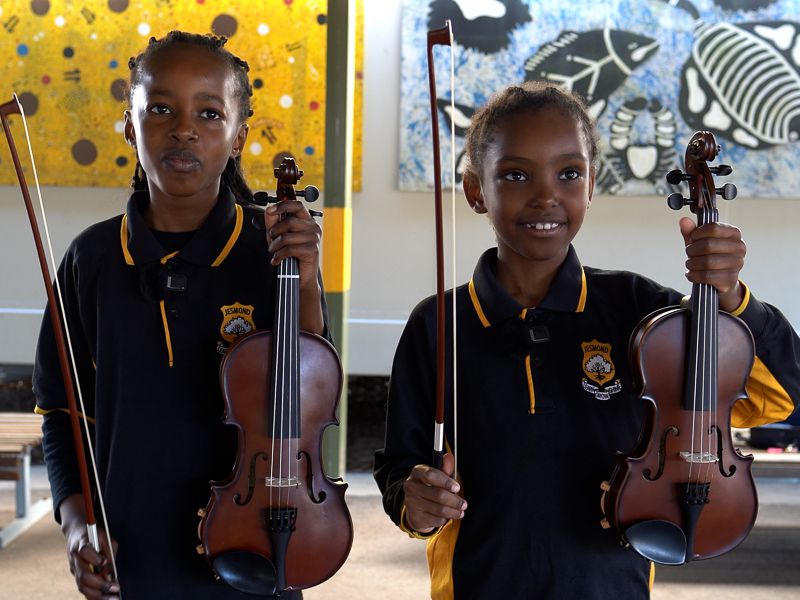
Warvin and Marwa get ready
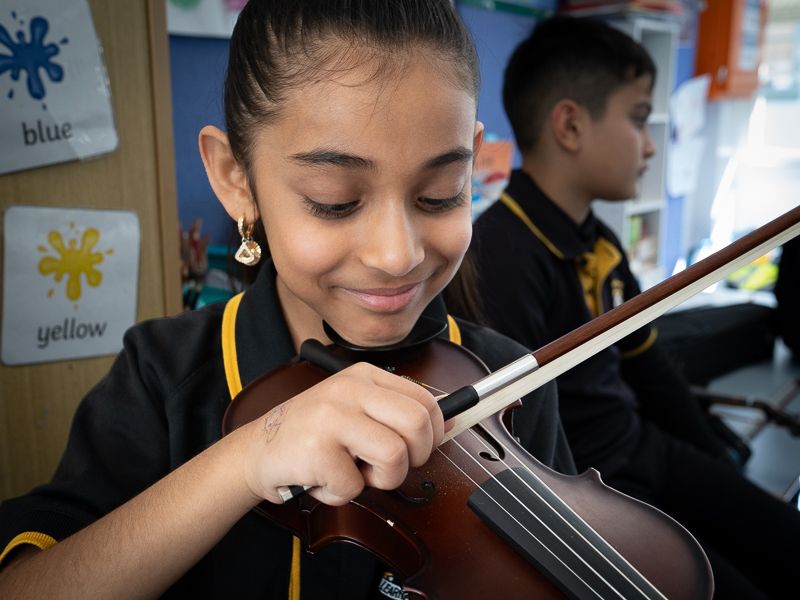
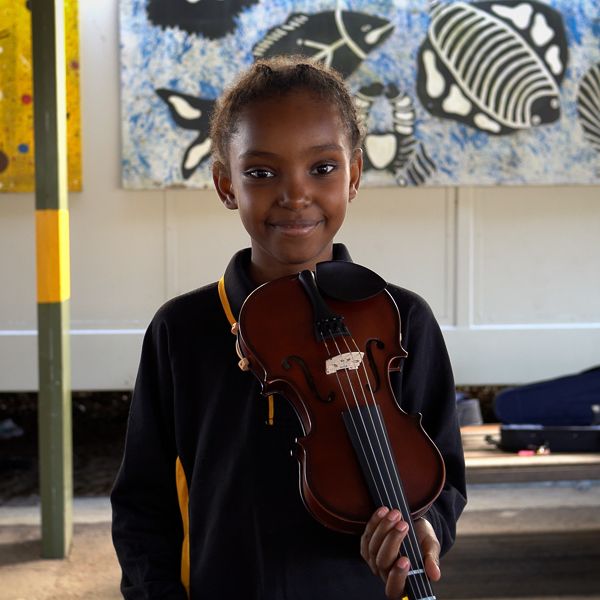
Marwa and her violin
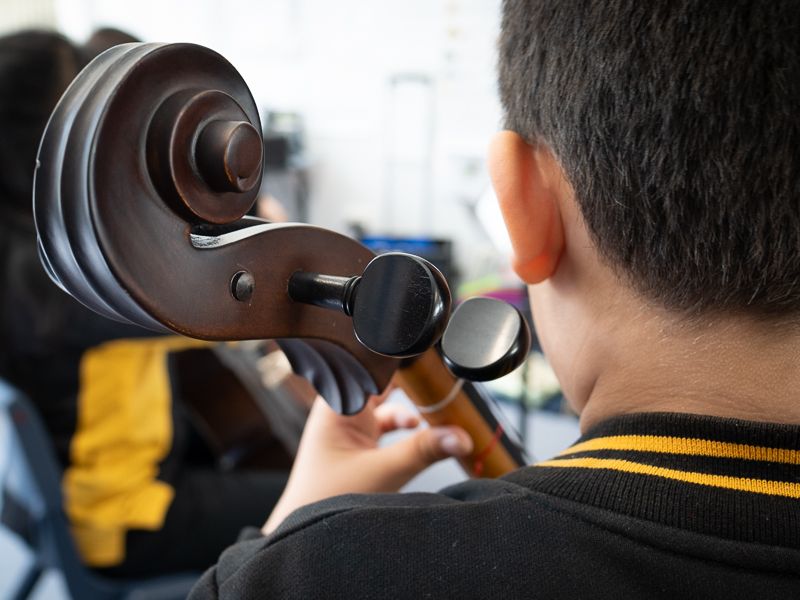
Saulaiman on the cello
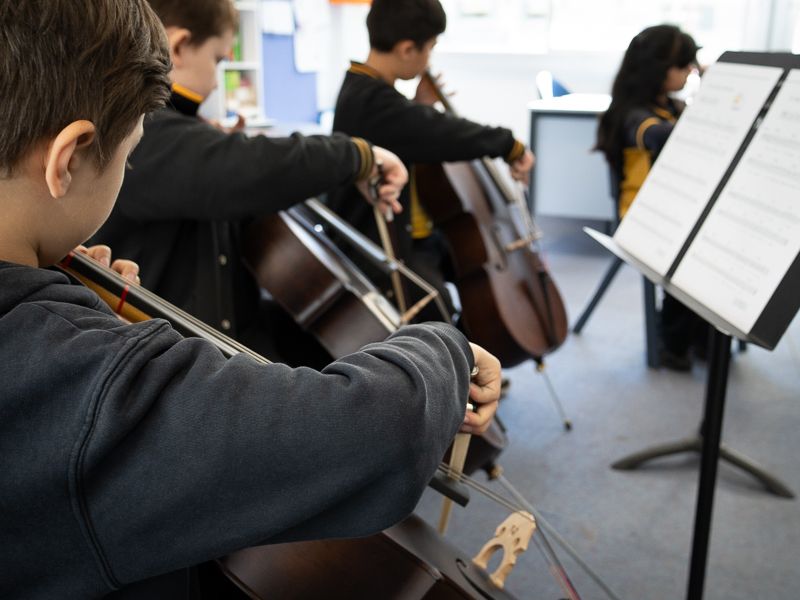
Cellos in action
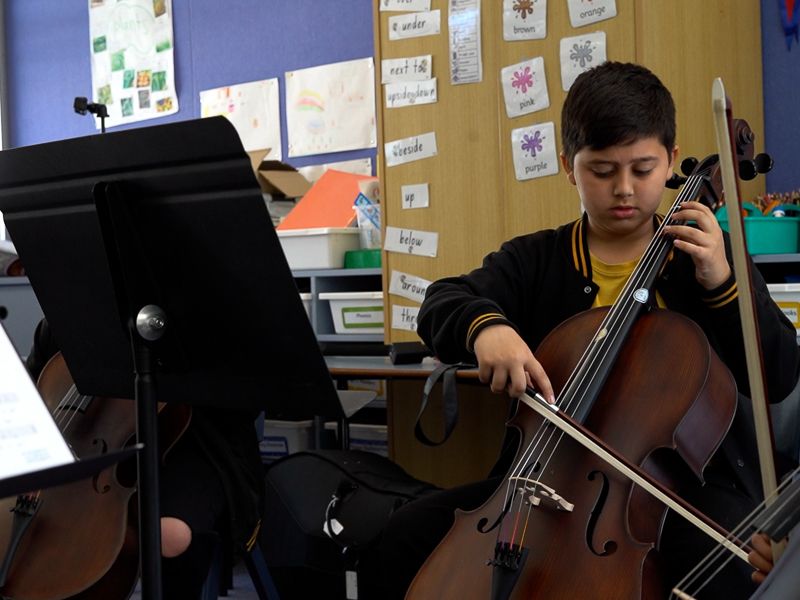
Saulaiman solos on the cello
Supported by a generous bequest from Pauline Snow, the initiative aims to provide unique opportunities which recipients may not have otherwise had the means to access, making music accessible to all.
“It’s so rewarding when you see the students grow in their skill and teach them a sense of consistency and determination to keep working on that skill. Which comes with the good… and the bad,” Bernice laughs.
“They are using listening, understanding and motor skills all at once. It goes far beyond music tuition. As a person, it can really teach them what discipline and consistency are. If they make mistakes, it’s okay. We all just need to do our best.”
Bernice admits that’s herself included.
“Music is problem solving. Life is full of problems, so when you play an instrument, you’re learning how to deal with problems more generally,” Bernice stresses.
“We are all from different places and all have different accents in this room, and everyone is curious. But slowly we’ve begun to understand each other better – me them, and them me.”
Regardless of background or whether they converse in Dari, Pashto, French, Arabic, English, Afrikaans or Maltese, Bernice Musu Portelli strives to do one key thing for her students.
Once you have your instrument ready to play, you’re speaking a universal language - Bernice Musu Portelli
“That’s why connecting with each other through music is such an incredible thing. Once you have your instrument ready to play, you’re speaking a universal language,” Bernice beams.
“At the end of the day, we’re all humans and I think the most important thing is that you’re comfortable in your safe space.
“We’ve made this a safe space for them.”
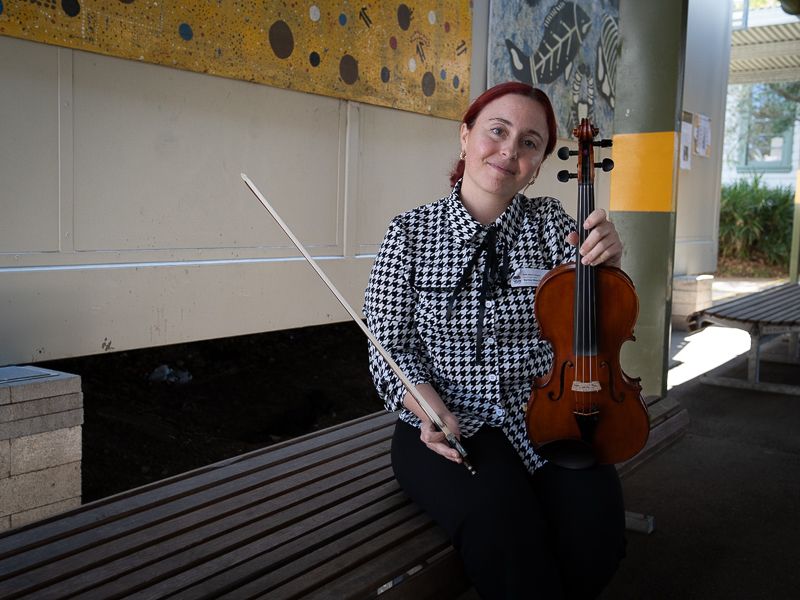
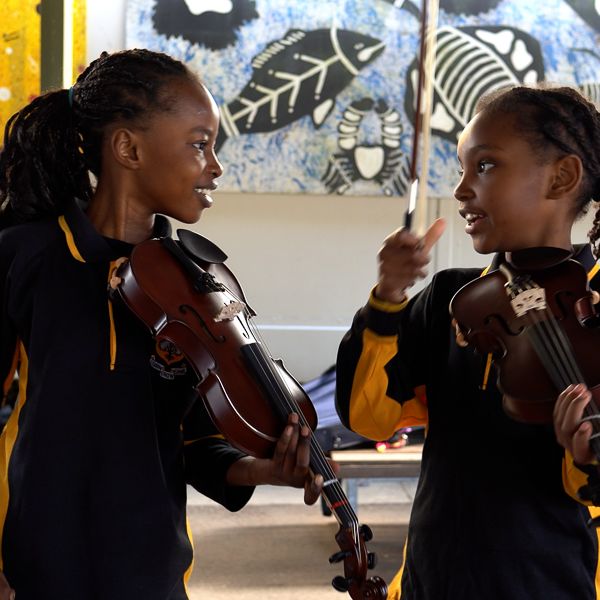
Bow in hand, 8-year-old Monet turns to classmate Josie and gives her a directive with proud determination.
“Let’s do four As, four Bs and four C sharps,” she whispers.
Josie nods in agreement and they assemble themselves and their violins into the ‘ready position’ they have perfected in Miss Portelli’s music lessons.
When we learn a new note, it’s hard, but the more we do it, it gets easier - Monet
Chin on rest and fingers carefully aligned on strings, they commence pulling and pushing notes from their violins with long and purposeful movements. It’s over quickly, but the girls beam with pride at the sounds they’ve produced.
“We only know A, B and C sharp. We’re learning Mary Had a Little Lamb,” Josie says as they finish the tune.
“When we learn a new note, it’s hard, but the more we do it, it gets easier,” Monet adds.
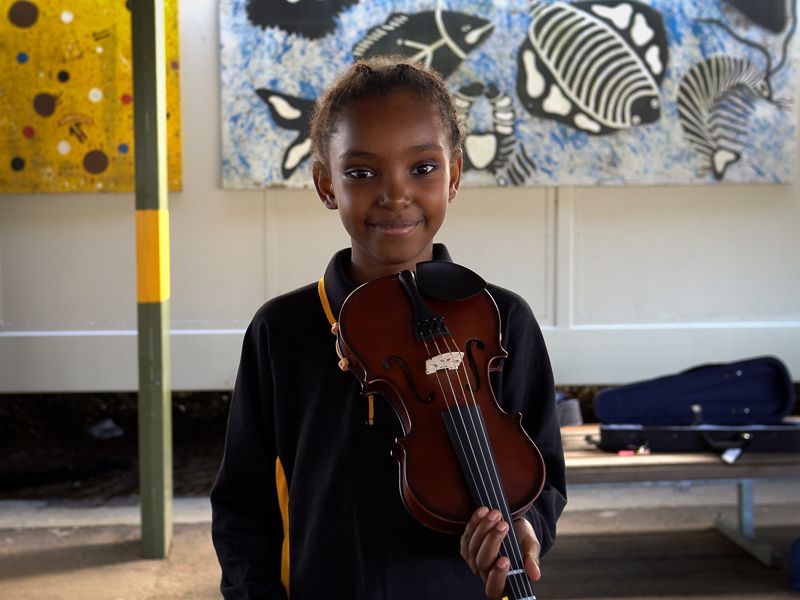
Monet says the violin gets easier with practice

Josie and Monet in the 'resting position'
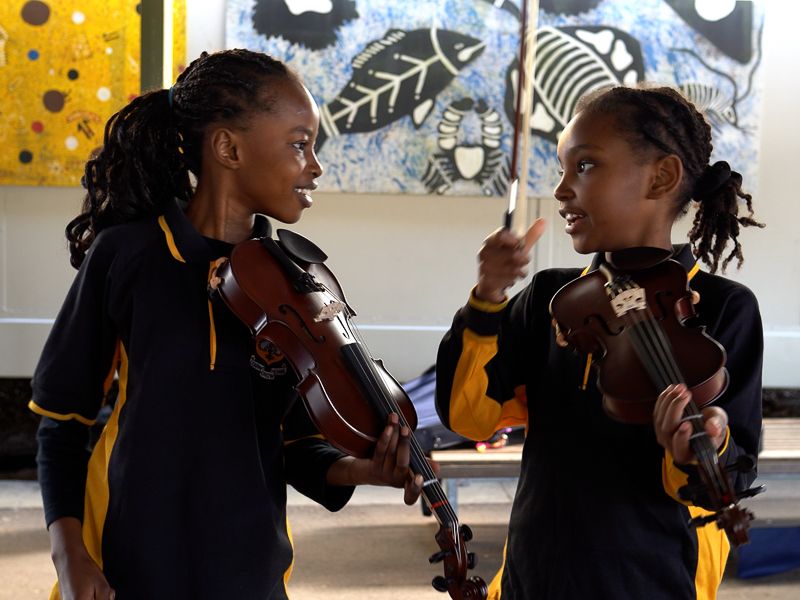
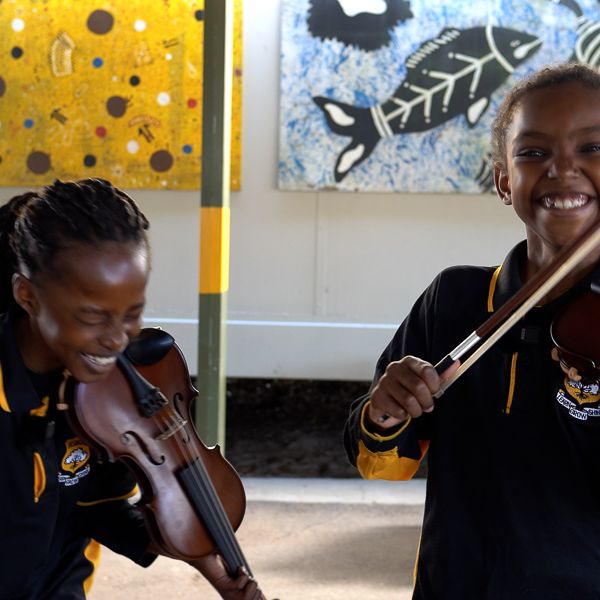
The girls plan a tune to show off their strings skills
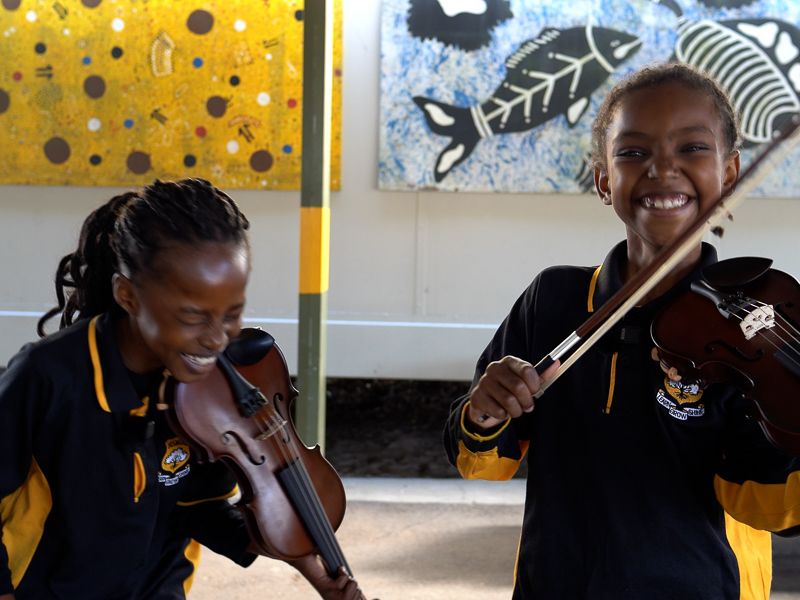
Silly strings
Sitting on the sidelines of Bernice’s classroom today is Jesmond Public’s Principal, James McGill. With fond memories of learning an instrument as a kid himself, James was a key driving force behind the Strings Academy and likes to pop in to see how the students are progressing.
“It’s a pretty special place to work,” he smiles.
“There are children from all over the world in this class. There are children who were born in Australia alongside children who speak very limited English – but they’re unified learning the same thing and doing it together.
“It’s really important for these kids to see someone like Miss Portelli in front of them. To see that you can learn English as an additional language, be different to others and still have an incredible impact and do great things.”
Talent is everywhere but opportunity isn’t. - James McGill
One of James’ favourite things to point out to school visitors is the way the students have personalised their instrument cases. Shining and jingling with charms, ribbons and keychains, each student has created their own proclamation to the world that it’s theirs.
“The students take their instrument home with them to practice, and they’re all just so proud. One of my favourite parts of a Friday is when they walk out of school and – you can see it in their demeanor – they are a violin player or a cello player,” he explains.
“And that’s the point – more so than learning the instrument. That they can build a sense of self-esteem as individuals. That sense of identity is changing for them, and that’s really powerful.”
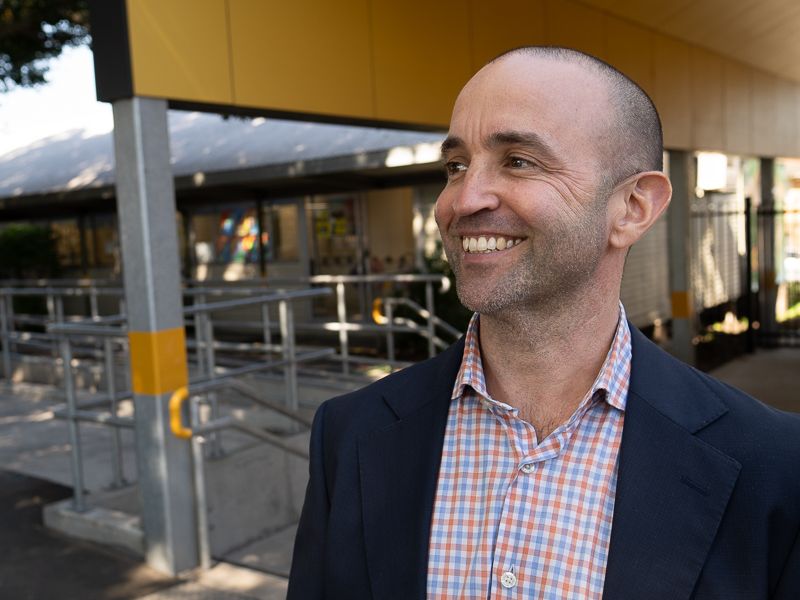
Given their close proximity to the University of Newcastle’s Callaghan campus, James has developed a strong partnership with the University in his three years as Principal at Jesmond Public.
Between initiatives like Children’s University and the delivery of Jesmond String Academy, the school is committed to providing opportunities for their students to be exposed to higher education, encouraging them to envision a future for themselves they may not have known was possible.
“It’s something awe inspiring for the students and their parents. For the parents to visit somewhere like the University’s Great Hall and see what’s hopefully down the track for their children – they’re able to see that their kids can achieve whatever it is that they set out to achieve,” he says.
There are children from all over the world in this class... but they’re unified learning the same thing and doing it together. - James McGill
At home, Josie likes pop music and Monet likes to listen to piano. Marwa listens to rock to amp her up, and calming music to calm her down. Sumah loves Carol of the Bells. Elliot listens to the Congolese rhythms his dad plays.
At school, they’re united in their passion for learning the strings.
“Talent is everywhere but opportunity isn’t. Our partnership with the University is helping to change that,” James says.