The morning mist hangs low, hugging the branches of the narrowleaf iron barks surrounding Sophie Nichols’ farm on Wonnarua Country in Belford, New South Wales.
Birds begin to call, chickens appear clucking rhythmically, and the kettle comes to the boil – all sounds signifying the start of another new day.
Sophie emerges from the veranda of the family home. Crate in hand and work boots on, she trudges a well-known path through the dewy grass with her trusty maremmas at the heel.
It’s the same path trodden by her grandfather, and his father before him.
“I'm the fourth generation [to farm] on this parcel of land. So, keeping that tradition is quite a lovely feeling" - Sophie Nichols
100 acres of sprawling land surrounding her, she heads straight for the orchard where the plums are crimson and the fig trees droop, laden with fruit. This is her office.
“It's an honour to provide food to people to eat,” Sophie muses.
“I'm the fourth generation to do so on this parcel of land. So, keeping that tradition is quite a lovely feeling.”
Produce in arms, Sophie checks on her grazing flock of sheep before she packs up and hits the road to deliver the goods. Biodynamic, organic permaculture principals are at the heart of her work, and local businesses are hungry for it.
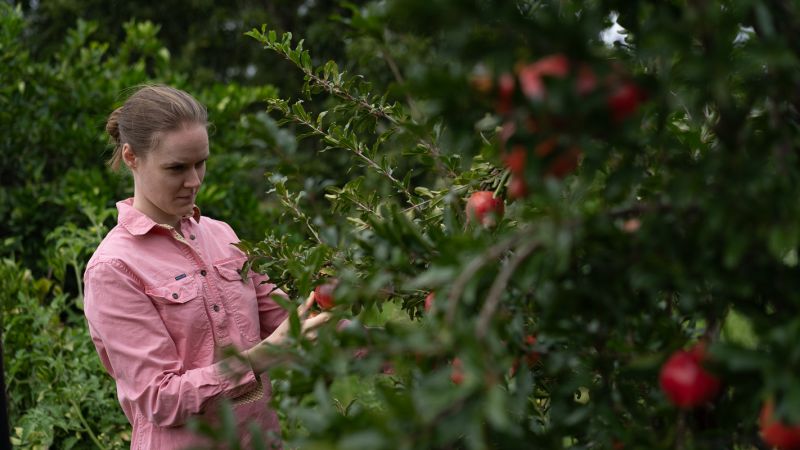
Sophie Nichols inspects her pomegranate tree
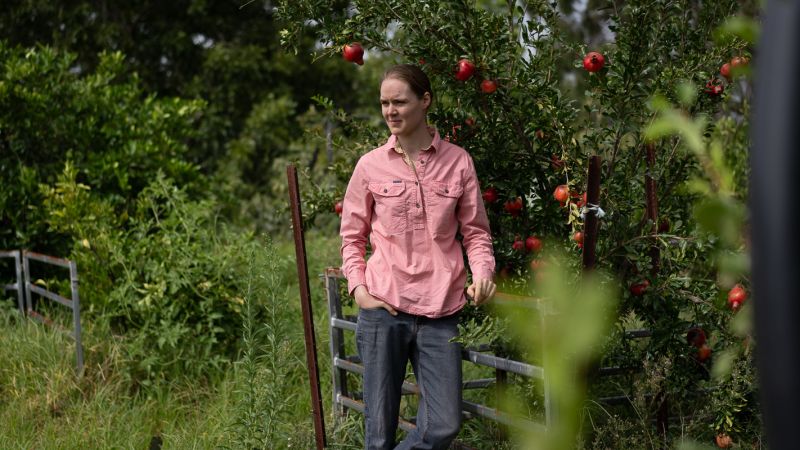
Sophie Nichols on her farm outside Singleton, NSW
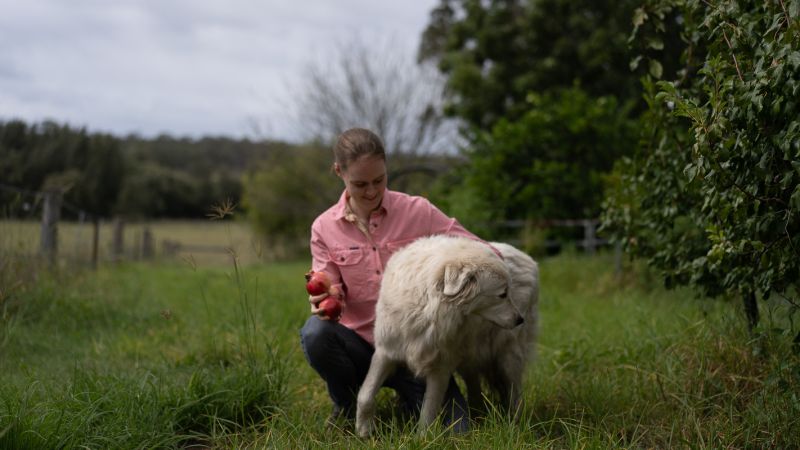
Sophie and one of her trusty maremmas, Reggie
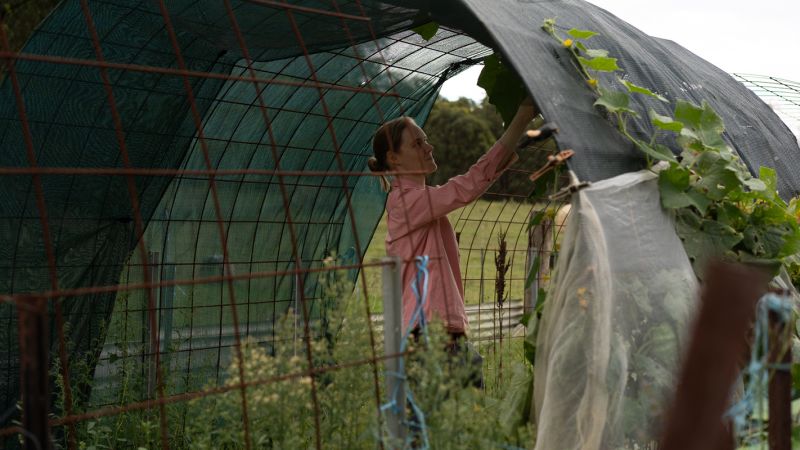
Sophie Nichols reaches up to pick a cucumber from the vine
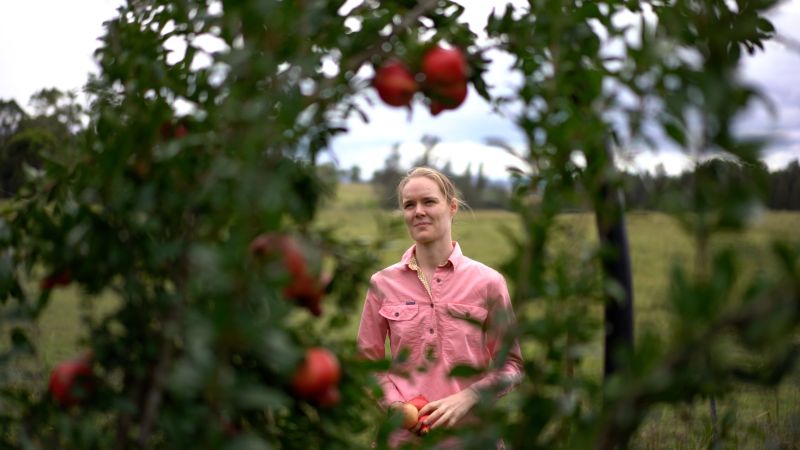
Sophie Nichols through her pomegranate tree
Heading north-west from Sophie’s place along the New England highway in the Hunter Valley, anyone naïve to the area’s topography could easily become enamoured with the lush growth surrounding the highway.
But for Sophie, the low wire fences and hazard signs are a stark reminder of the industry deep behind the strategically planted tree line.
Sophie’s regular route passes two of the approximately 100 coal mines in Australia. Around 35 are in New South Wales, with the Hunter Valley arguably the state’s main coal field.
In NSW, coal mining currently employs around 23,800 people and generated $23.4 billion in exports during 2025*. (*NSW gov’t Coal Industry 2026-2050 report)
However, with the growing urgency to pivot away from fossil fuels and reach net zero by 2050, plans for 17 mine closures in the Hunter Valley over the next 20 years continue to saturate the media, policy-maker pledges and dinner conversations.
A Shift in Energy
Up the Valley from Sophie’s place – halfway to Muswellbrook along the New England Highway – you pass the towering columns of AGL’s former coal-fired power station, perched on the edge of the contaminated Lake Liddell. In 2026, the towers are expected to fall, marking the site’s transformation into a renewable power hub.
Turn left shortly after Liddell and you’ll come to the Mt Arthur mine, which spans 7,000 hectares and employs around 2,200 people – many who live in the area and are grappling with the news it will cease operation by 2030.
In NSW, coal mining currently employs around 23,800 people and generated $23.4 billion in exports during 2025.
It’s a crucial moment in time for industry, the workers and the local communities who make up the region’s rich tapestry.
But coal mining is only a recent part of the regions’ identity.
When Uncle Warren Taggart would ‘go bush’ as a boy, he’d head into the mountains with his dad to cut timber, listening to his father’s stories of the land, its inhabitants and how Country sustained his ancestors.
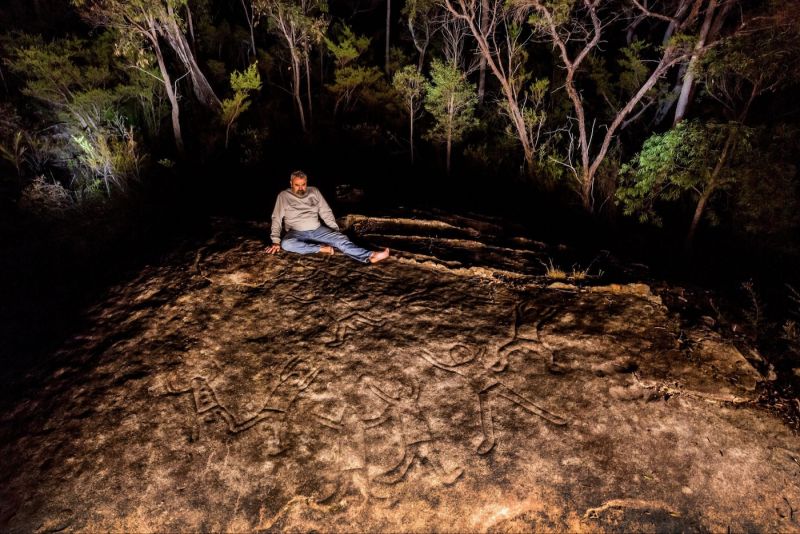
“My ancestors came through from Putty and made their way to Broke and now Singleton,” he explains.
“I know what’s in these mountains. I know what’s in these creeks. This land holds my family tree.”
Meaning ‘people of the hills and plains’ in language, the Wonnarua people have seen the land around them transform over generations of stewardship.
“I've seen it change from beautiful, lush countryside to massive, grey holes,” Uncle Warren stresses.
“The trees are suffocating. You can see the dust on all the leaves from around the sites. They can’t breathe,” he says.
“There are no plains anymore. The hills are man-made berms to cover the mines. And they can say ‘look – we’ve planted all these trees on this hill’, but there was no hill there in the first place.”
“The trees are suffocating. You can see the dust on all the leaves from around the sites. They can’t breathe.” - Uncle Warren Taggart
“There needs to be care and consultation in the restoration, but a lot of these company’s heads are overseas and detached from what’s happening here on the ground – there’s an attitude of ‘that’s somebody else’s problem’.”
Given Sophie Nichols’ great grandfather established Australia’s first open-cut thermal coal mine, Blair Athol, in the 1930s, she isn’t ignorant of the prosperity the industry has brought to the nation.
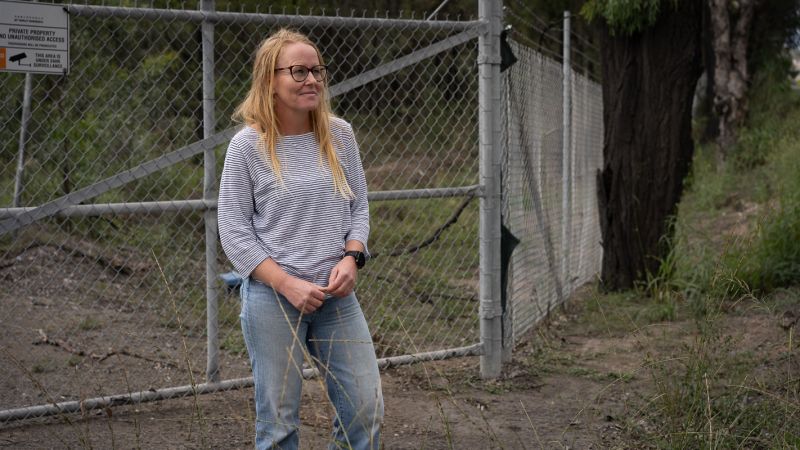
However over four generations in the area, Sophie’s concerns now echo Uncle Warren’s – the management and rehabilitation of the empty voids and used land that will be left as vast craters once the sites are abandoned.
“It’s estimated that 25 to 30 ‘final voids’ will remain across the Muswellbrook and Singleton LGAs,” she says.
“Voids aren’t included in the Mining Act legislation which makes it very confusing. They’re not considered dams, even though that’s how they act, so there isn’t any requirement for water quality to be regulated.”
"A lot of people that live in Muswellbrook now, they’ve come solely here for jobs. They’re not Muswellbrook locals, and they won’t stay." (participant quote)
It’s these questions and concerns, alongside the lived experience of the locals connected with the region, that Associate Professor Hedda Askland from the University of Newcastle’s Institute for Regional Futures, has made it her mission to capture.
“The communities in the Hunter region who have been heavily shaped by the coal industry are understandably anxious about what the transition ahead of them will look like,” Hedda explains.
In response to BHP’s closure announcement for Mt Arthur, Hedda commenced extensive conversations with Muswellbrook residents ‘not engaged in public discourse’ about their hopes, fears and expectations for the future.
“Understanding what everyday people value about the place they call home is an imperative step toward considering how to best protect communities from any negative impacts of closure.”
Her work is painting a clear picture of the wants and needs of the people – like Sophie and the Taggart family – who will remain behind long after industry leaves.
"It’s estimated that 25 to 30 ‘final voids’ will remain across the Muswellbrook and Singleton LGAs" - Sophie Nichols
“We’ve found that coal is an important part of the narrative of ‘place’ but not at the centre of people’s identity,” Hedda explains.
“While residents take pride in the town’s mining history and its role in ‘powering the nation’, there is a parallel awareness of the negative impacts the industry has had and a sense that Muswellbrook is owed for the sacrifice it has made.
“That’s where community legacy initiatives will be key for the big businesses transitioning to closure.”
"I have nightmares about tumbleweeds in the main set once it [mining] closes. I mean, I would struggle if the town got any smaller, I guess." (participant quote)
In 2025, Hedda’s conversations culminated in the My Muswellbrook report – 12 recommendations and nine key principles for a place-based, community-endorsed closure strategy for BHP to consider as part of its duty to the region which has facilitated its prosperity.
“The community see the Muswellbrook closure as a pivotal event that will set a precedent for future mine closures and, in doing so, position the region as a shining example of managing a post-mining future,” Hedda explains.
“But it’ll only be possible if industry ensures trust is built and maintained with affected communities throughout the transition process.”
Recommendations
Recommendation 1: Invest in social infrastructure and support for programs that sustain community identity and cohesion, provide opportunities for young people, and enable cultural connection and exchange
Recommendation 2: Integrate heritage and cultural preservation and restoration as integral to rehabilitation and to the maintenance of identity and connection to place.
Recommendation 3: Prioritise equity and access, ensuring disadvantaged and marginalised groups are not left behind in the closure process.
Recommendation 4: Invest in training, upskilling, and employment programs for the whole community, with tailored initiatives for young people and Indigenous residents.
Recommendation 5: Position youth within closure strategies through training, employment pathways, and participation in post-mining projects and future industries.
Recommendation 6: Develop Indigenous enterprise and employment strategies to ensure long-term inclusion and benefit from land-use change.
Recommendation 7: Engage in collaborative planning for post-mining land use—particularly buffer lands and mining voids—with a focus on sustainable industries, conservation areas, recreational alternatives, and long-term environmental and social benefits.
Recommendation 8: Incorporate Indigenous knowledge in land-use planning and rehabilitation, supporting Indigenous-led restoration and pathways to cultural and land ownership.
Recommendation 9: Advance local procurement, business investment strategies, and community- ownership models to ensure jobs are retained in Muswellbrook and local workers benefit from rehabilitation and post-mining development.
Recommendation 10: Support community-run social enterprises that strengthen local economies, build skills, and foster social connection.
Recommendation 11: Create transparent, inclusive and compensated governance structures to ensure community participation in closure decisions.
Recommendation 12: Deliver community education and closure literacy initiatives to support informed, proactive engagement in the closure of Mt Arthur.
"It is a domino effect. When BHP does go, they do have their plan, you can plan as much as you like, but there will be the domino effect where the employee might move away with their family. They’re taking the child out of the school, out of the sporting groups, they’re not spending at the cafes, they’re not going to the pubs anymore. There’s a domino effect with a lot of other businesses where it’s not just affecting them, it’s affecting their business families as well. That cafe might have to close. Then that family’s gone and they have to move away. It’s just kind of that domino effect of jobs and employment. I’m a bit worried about that." (participant quote)
Like her family before her, Sophie Nichols is in it for the long haul.
“There’s a lot of focus on the jobs element of the transition and I think the land rehabilitation is often omitted from the conversation,” she says.
“A lot of the trees on this farm were cut down for underground mining props back in the day and it’s been about 50 years of rehabilitating the area to get it up to an ecological standard that can be protected.
“I’ve seen firsthand the length of time it takes to recover the biodiversity that was lost and I do worry that we're leaving our run too late in terms of getting the rehabilitation right.”
"There’s a lot of focus on the jobs element of the transition and I think the land rehabilitation is often omitted from the conversation." - Sophie Nichols
To maintain prosperity as she faces the transition, Sophie is taking key steps to futureproof her place – investing in solar, batteries and exploring flexibility in her farm’s income streams.
With a keen interest in applying elder knowledge to caring for the land, she has been inspired to undertake a PhD to help inform the transition journey. Alongside Associate Professor Hedda Askland, Sophie’s efforts are harnessing local knowledge to inform the road to restoration.
“I know a lot of old-timers who have worked this land for many years. Most have been here since long before there was mining, with some of their farms becoming directly affected,” she explains.
“I’ve learnt a lot from them, so I wanted to capture their experiences. We talk about Indigenous cultural knowledge a lot, but we should be putting those things into practice. The responsibility for rehabilitation shouldn’t fall to the Indigenous community – their knowledge should be harnessed to repair what has been broken.”
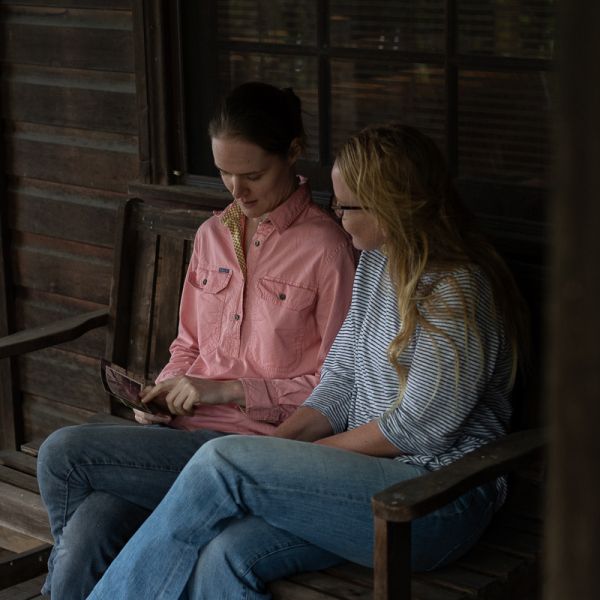
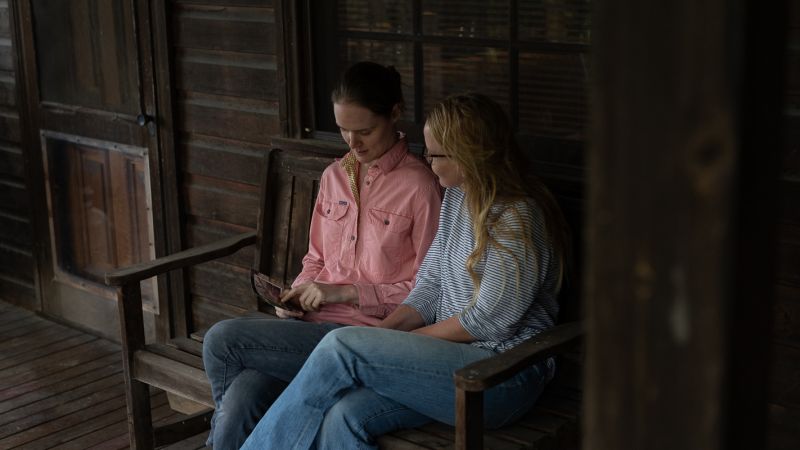
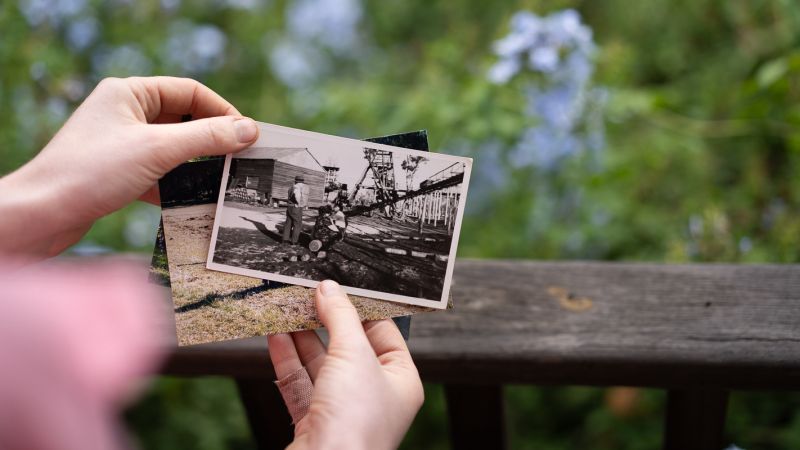
Sophie shows Hedda old photos of her family on the farm

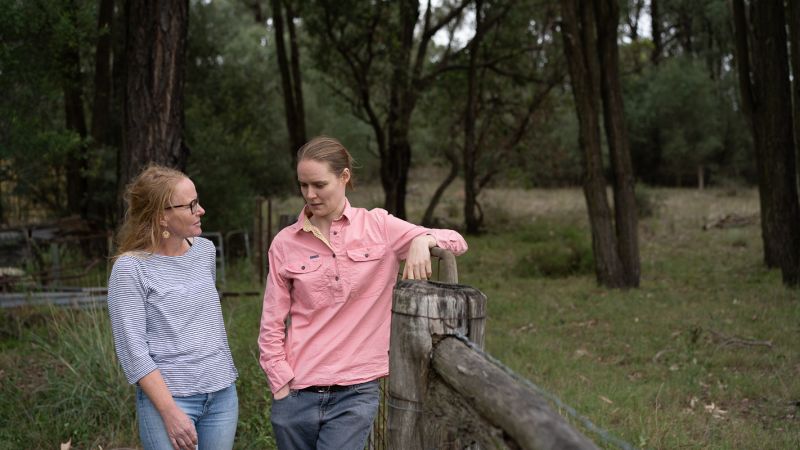
Hedda Askland and Sophie Nichols in conversation on the farm

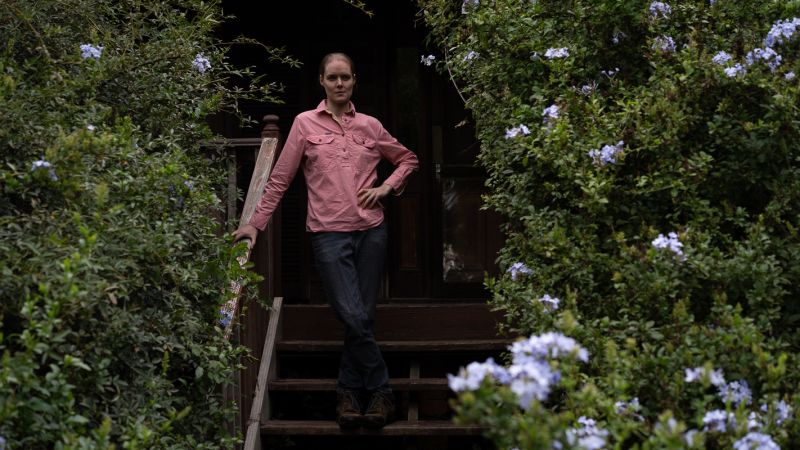
Sophie Nichols looks over the farm from her veranda
Uncle Warren’s daughter, Kerri-Ann, finds her own peace in the same mountains her dad spent time as a kid – although, she notes the path to get there these days is very different.
“There are a lot of new roads and grey dirt, because there's new mines and expansions on the way, but it is so nice to go up in the mountains and just be in the bush. I don't feel scared. I can be in any direction, it doesn't matter. I'd be able to get home.
Imagining a realistic future for the transition, Kerri-Ann reflects that honesty and trust should be paramount.
“It’s not just a question of ‘how do we fix this damaged land?’, which is often how mining companies and governments frame it. You’re asking something much, much deeper – ‘how do we heal Country in a way that respects our traditional connection to it?’”
Recommendation 8: Incorporate Indigenous knowledge in land-use planning and rehabilitation, supporting Indigenous-led restoration and pathways to cultural and land ownership.
“I’d want these places to become landscapes where cultural stories return, where Country slowly recovers its identity, and where communities can reconnect with a place that was disrupted but not lost, a future shaped by culture and responsibility rather than extraction.
“If all avenues of reclamation have been exhausted and the space is environmentally unsuitable for rehabilitation, create manmade spaces for people to visit. Museums, galleries, Cultural learning spaces, odes to culture, and art to remember what was once there. That’s how I think we should honour Country.”
My Muswellbrook report
The global energy landscape is transforming
Be part of the change